
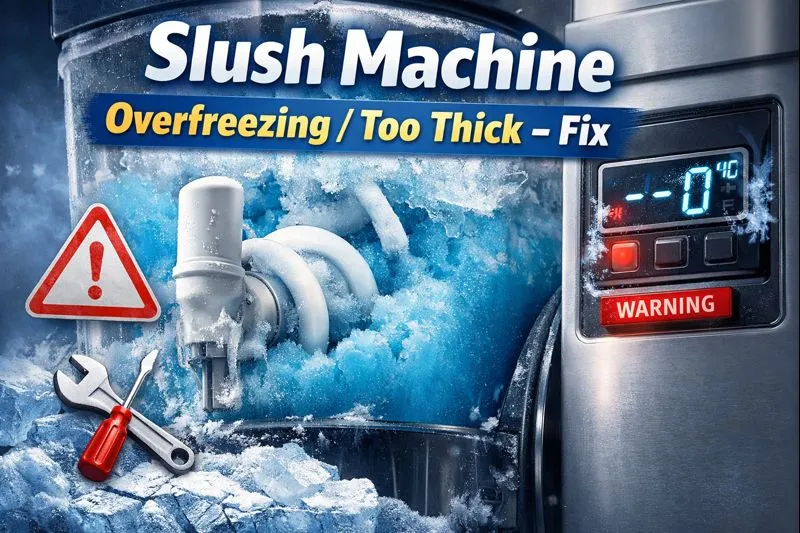
When a slush machine overfreezes, the drink becomes so thick that it barely moves—or worse, doesn’t come out at all. Instead of smooth, refreshing slush, you get a solid, icy mess stuck inside the barrel. This is a common problem for both home and commercial slush machines.
The real frustration starts when the machine keeps running, making strange noises, putting pressure on the motor, and wasting syrup while customers or guests wait. Over time, this kind of strain can damage internal parts, reduce efficiency, and lead to expensive repairs.
The solution is simpler than most people think. Slush machines usually overfreeze because of small setup or usage mistakes, not because the machine is broken. Once you understand what causes the slush to become too thick, fixing it—and preventing it—becomes easy.
Why Slush Becomes Too Thick or Overfrozen
A slush machine is designed to freeze liquid slowly while constantly mixing it. When this balance is disturbed, the mixture freezes too hard.
The most common cause is an incorrect syrup-to-water ratio. Slush mixes need enough sugar to control freezing. If there’s too much water or the syrup is diluted incorrectly, the mixture freezes faster than the machine can manage. This turns soft slush into solid ice.
Temperature settings also play a major role. Lowering the temperature too much may seem like a good idea, but it actually causes the slush to harden. Every machine has a recommended temperature range, and going below it almost always leads to overfreezing.
Another overlooked issue is poor airflow. If the condenser coil is dusty or ventilation is blocked, the cooling system behaves unpredictably. This can cause uneven freezing inside the barrel, making parts of the slush extremely thick.
You might also like: Slushie Machine Not Freezing – Causes & Fixes
How to Fix an Overfreezing Slush Machine
Start by pausing the refrigeration, not the mixing. Let the slush soften slightly so the auger can move freely again. This usually takes 10 to 20 minutes.
Next, check the mixture. Measure the syrup and water carefully and correct the ratio according to the manufacturer’s instructions—most machines work best around a 6:1 water-to-syrup ratio.
After that, adjust the temperature slightly higher. Even a small increase can make a big difference. Restart the refrigeration cycle and allow the machine some time to stabilize before making further changes.
If the slush still feels uneven, inspect the machine physically. Make sure the spiral or auger is rotating smoothly and there’s no blockage inside the barrel. Also check that the machine isn’t running with very low liquid levels, as small volumes freeze much faster.
How to Prevent Overfreezing in the Future
Consistency is the key to preventing thick slush problems. Always prepare the mixture accurately and avoid guessing measurements. Regular cleaning is equally important—dust on the condenser coil or syrup buildup around seals can affect freezing behavior.
Airflow should never be restricted. Keep enough clearance around the machine and clean the condenser weekly using a soft brush. If your machine has an overnight or standby mode, use it instead of letting the refrigeration run continuously.
It also helps to monitor usage. Machines that sit idle for long periods while fully chilled are more likely to overfreeze. Adjust settings based on how frequently the slush is being dispensed.
When Overfreezing Means a Technical Problem
If the slush keeps freezing too hard even after correcting the ratio, temperature, and airflow, the issue may be mechanical. Faulty thermostats, worn sensors, or cooling-cycle problems can all cause uncontrolled freezing. In these cases, professional diagnostics or replacement parts may be necessary.
Final Thoughts
A slush machine that overfreezes is usually not broken—it’s just out of balance. By correcting the mixture, fine-tuning the temperature, and keeping the machine clean and well-ventilated, you can restore smooth slush texture and protect your equipment from unnecessary wear.
Perfect slush isn’t about colder settings—it’s about the right balance.