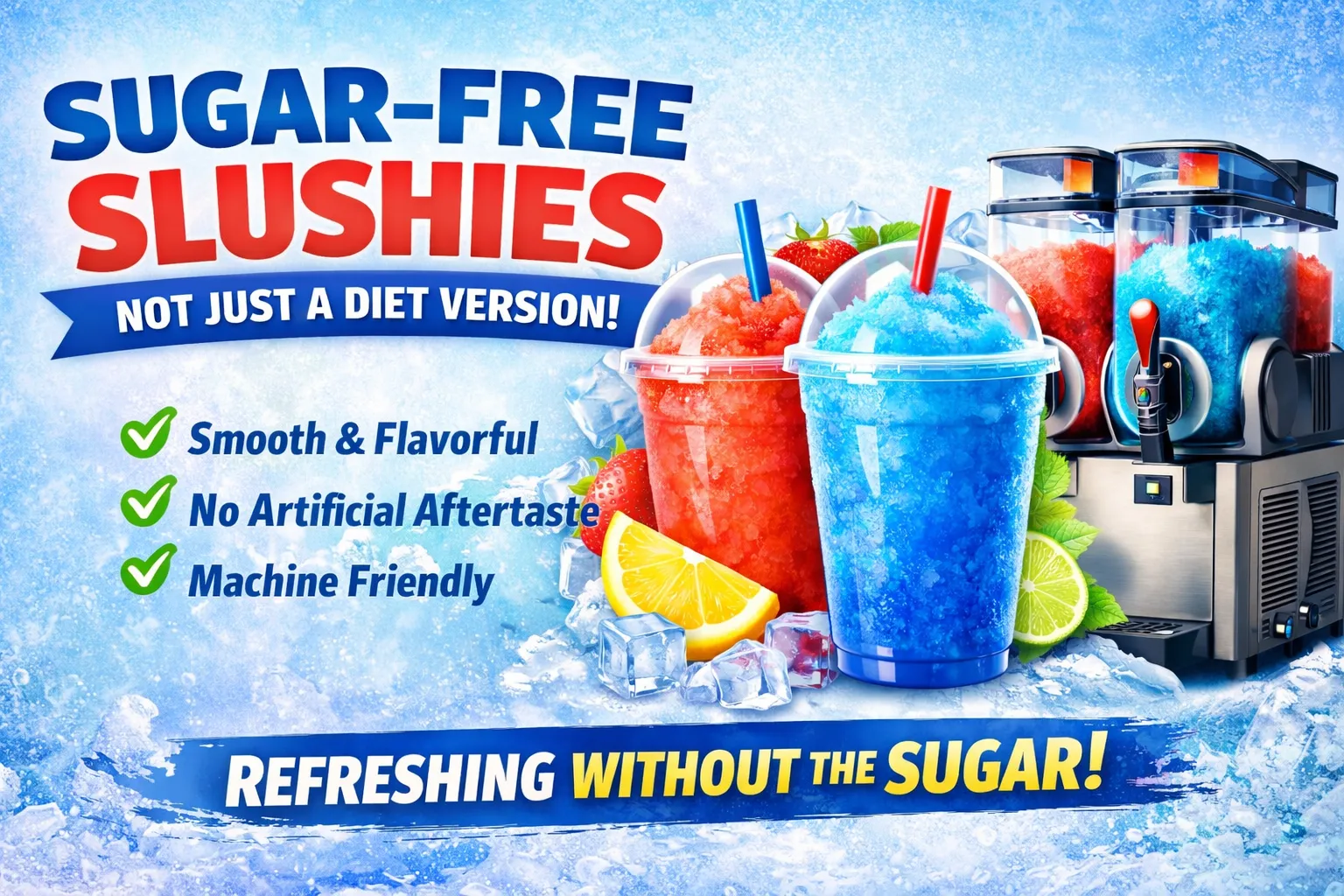
Sugar-free slushies are no longer just a “diet version” of a frozen drink. When made correctly, they can be smooth, flavorful, and fully compatible with slush machines—without artificial aftertaste or freezing problems.
The key is understanding one critical truth:
Sugar is not just a sweetener in slushies — it is a structural ingredient.
That’s where allulose changes everything.
In this Slush Web guide, you’ll learn how to make sugar-free slushies using allulose, why most sugar-free slush recipes fail, how freezing chemistry works, and how to get consistent results at home or in commercial slush machines.
What Is a Sugar-Free Slushie?
A sugar-free slushie is a frozen beverage made without sucrose, glucose, or corn syrup, while still maintaining:
- Semi-frozen slush texture
- Smooth ice crystals
- Proper machine flow
Unlike traditional “diet drinks,” a real sugar-free slushie must control freezing behavior, not just sweetness.
You might also like: Slushie Syrup Alternatives
Why Sugar Matters in Slushies (Beyond Sweetness)
In a standard slush recipe, sugar performs multiple jobs:
- Lowers the freezing point of water
- Controls ice crystal size
- Prevents solid freezing
- Maintains flow inside slush machines
When sugar is removed without replacing its functional role, the result is:
- Rock-hard freezing
- Icy, crunchy texture
- Auger jams
- Machine overfreezing
This is why most sugar-free slushies fail.
Why Sugar-Free Slushies Fail Without Allulose (Research-Backed)
Most sugar-free slush recipes rely on high-intensity sweeteners alone. While these provide sweetness, they do not affect freezing behavior at all.
What Actually Goes Wrong
Without a sugar-like compound:
- Water freezes at its normal freezing point
- Ice crystals grow too large
- The mixture becomes solid instead of slushy
This isn’t a recipe flaw — it’s a freezing chemistry issue.
What Research Shows About Allulose
Food science research on frozen desserts (including ice cream and frozen beverages) consistently shows that allulose behaves like real sugar during freezing.
Research and industry formulation data demonstrate that:
- Allulose significantly depresses the freezing point of liquids
- Frozen products made with allulose show softer freeze and smoother texture
- Hardness and meltdown behavior closely match traditional sugar formulations
This explains why allulose is increasingly used in commercial low-sugar and sugar-free frozen products.
In contrast, sweeteners that only add sweetness leave water to freeze hard.
Why This Matters for Slush Machines
Slush machines operate in a narrow temperature window. They require:
- Controlled ice formation
- Semi-frozen viscosity
- Continuous agitation
Industry formulations using allulose show that when sugar is replaced correctly, freeze stability and texture remain machine-safe. This is why sugar-free slushies made without allulose or another bulk sweetener almost always fail in machines.
What Is Allulose?
Allulose is a rare sugar found naturally in small amounts in foods like figs and raisins. It tastes like sugar, dissolves like sugar, and freezes like sugar — but provides near-zero calories and minimal impact on blood glucose.
Why Allulose Is Ideal for Slushies
- Lowers freezing point (like sugar)
- Prevents hard freezing
- Creates smooth ice crystals
- No bitter aftertaste
- Machine-compatible when used correctly
For slushies, allulose is not just a sweetener — it’s a functional replacement for sugar.
Best Sweetener Strategy for Sugar-Free Slushies
For consistent results, SlushWeb recommends:
- Allulose → Primary sweetener & freezing control
- Vegetable glycerin (optional) → Texture stability
- Optional: stevia or monk fruit → Sweetness boost only
In many cases, allulose alone is sufficient, especially for home use.
Sugar-Free Slushie Recipe Using Allulose (Home Method)
Ingredients
- 1 part sugar-free flavor concentrate
- 4 parts water
- 3–5% allulose by volume (Click here to know about allulose ratio in slushies)
- ~1% vegetable glycerin (optional but ideal)
Instructions
- Dissolve allulose completely in water.
- Add flavoring and glycerin.
- Chill the mixture thoroughly.
- Carefully pour your pre-chilled drink mixture into the machine’s bowl. Don’t fill it to the top — leave some space for mixing.
- The machine will freeze and churn the mixture automatically. (Let it run for 25-40 minutes, depending on your machine model and mixture).
Result: Smooth, scoopable slush — no icy crunch.
SlushWeb Pro Tips
Allulose is about 70% as sweet as sugar, so:
- Increase flavor concentration slightly
- Avoid over-sweetening
- Focus on flavor intensity, not just sweetness
Are Allulose Slushies Safe for Diabetics?
Yes. Allulose:
- Has minimal glycemic impact
- Provides near-zero net carbs
- Is keto-friendly
Caution: Large amounts may cause mild digestive discomfort for some people — moderation matters.
Final Thoughts
Sugar-free slushies don’t fail because sugar is removed — they fail because sugar’s function is ignored.
Allulose solves this problem by acting like real sugar during freezing, allowing you to create smooth, machine-safe, sugar-free slushies that feel and perform like classic slush formulas.
For SlushWeb readers, allulose isn’t just an option — it’s the foundation of successful sugar-free slush making.