As awareness around nutrition continues to grow, many people are reassessing everyday indulgences that were once considered harmless. Slushies—often associated with refreshment and leisure—have quietly become a concern for health-conscious consumers due to their high sugar content. A single serving can contain more sugar than an entire day’s recommended intake, contributing to blood glucose spikes, excess calorie consumption, and long-term metabolic stress.
This concern is not limited to individuals managing diabetes or weight; even otherwise healthy consumers are increasingly wary of frequent sugar exposure. Artificial sweeteners, while lower in calories, often introduce their own issues, including undesirable aftertastes and limited performance in frozen applications.
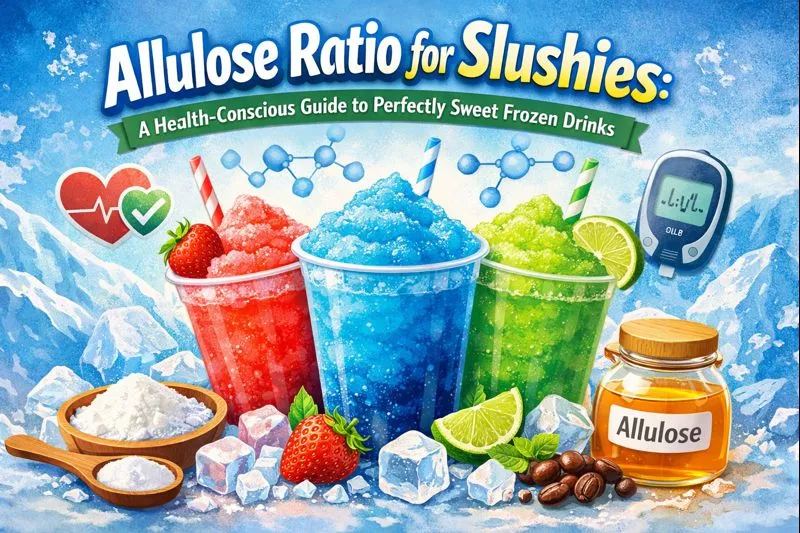
Allulose offers a compelling alternative. When used correctly, it delivers sugar-like sweetness, excellent freezing behavior, and minimal metabolic impact. Understanding the correct allulose ratio for slushies is essential to achieving the desired balance of flavor, texture, and nutritional responsibility.
What Is Allulose?
Allulose is a naturally occurring rare sugar classified as a monosaccharide. It is found in small quantities in foods such as figs, raisins, wheat, and jackfruit. Structurally similar to fructose, allulose behaves differently in the human body, resulting in unique nutritional and functional properties.
From a metabolic standpoint, allulose is absorbed but largely excreted without being converted into energy. This explains its extremely low caloric value—approximately 0.2 to 0.4 calories per gram—and its negligible effect on blood glucose and insulin levels.
In terms of taste and functionality, allulose closely mimics sucrose. It provides bulk, dissolves easily in liquids, and contributes to mouthfeel in a way that high-intensity sweeteners cannot. These qualities make it particularly well suited for frozen beverages.
Why Allulose Works Well in Slushies
Slushies rely on more than sweetness alone. Their quality is determined by ice crystal size, freezing point control, viscosity, and flavor release at low temperatures. Many alternative sweeteners fall short in one or more of these areas, but allulose performs consistently well.
Freezing Point Control – Allulose lowers the freezing point of water, which helps prevent the formation of large, hard ice crystals. This results in a smoother, more uniform slush texture that remains scoopable and drinkable over time.
Sugar-Like Texture – Unlike non-bulking sweeteners, allulose provides structure and body. This is critical in slushies, where the absence of bulk can lead to thin or icy results.
Clean Flavor Profile – Allulose has a neutral, sugar-like taste that does not introduce bitterness or metallic notes when frozen. This allows fruit, cola, coffee, and other flavor bases to remain balanced and refreshing.
Health Considerations – Because it has minimal impact on blood sugar and insulin, allulose is suitable for reduced-sugar, keto-friendly, and diabetic-conscious formulations when used appropriately.
Sweetness Comparison and Replacement Logic
Allulose is approximately 70% as sweet as sucrose, which means direct one-to-one substitution will result in reduced sweetness unless adjusted.
| Sweetener | Relative Sweetness |
|---|---|
| Sucrose (Sugar) | 100% |
| Allulose | ~70% |
| Honey | 110–120% |
| High-Fructose Corn Syrup | 105% |
This means you need more allulose than sugar to achieve the same sweetness—but not excessively more.
Standard Allulose Ratio for Slushies
How to Read These Ratios
To keep things consistent, all ratios in this guide are based on 1 cup (8 ounces / 240 ml) of total liquid.
These recommendations assume that:
- Allulose is the main sweetener, not just a small additive
- The drink is frozen into a true slush (not crushed ice)
- The goal is both sweetness and smooth texture, not sweetness alone
If you change the liquid type (juice vs water), add alcohol, or use additional sweeteners, the ratio may need small adjustments.
1. Basic Sugar-Free Slush (Water-Based)
Recommended formulation (per cup):
Liquid allulose: 2½–4 tablespoons
(≈ 30–45 g allulose equivalent)
Functional purpose:
- Provides sufficient sweetness (allulose ≈ 70% as sweet as sugar)
- Lowers freezing point to prevent hard ice formation
- Improves mouthfeel and slush stability
Adjustment notes:
- Use the lower end for lightly flavored slushes
- Use the higher end for plain water or strong freezing conditions
2. Diet Soda Slush (Sweetness Already Present)
Recommended formulation (per cup):
Liquid allulose: 1½–2 tablespoons
Functional purpose:
- Adds bulk and freezing-point control
- Compensates for sweetness loss caused by freezing
- Improves texture without oversweetening
Adjustment notes:
- Lightly degas soda before freezing
- Increase slightly for home freezers; reduce slightly for churned machines
3. Citrus or Flavor-Base Slush (Juice + Water)
Recommended formulation (per cup):
Crystalline allulose: ¼–⅓ cup
(≈ 45–60 g)
Functional purpose:
- Matches sugar-equivalent sweetness
- Maintains smooth slush texture
- Works with acidity to enhance perceived sweetness
Adjustment notes:
- Citrus acidity allows slightly lower allulose use
- Increase slightly if using neutral fruit bases
Clarifying Commonly Cited Allulose Ratios
Some formulations circulating online suggest much lower allulose quantities, particularly for water-based slushes. While these ratios may appear appealing from a calorie or cost perspective, they do not align with the physical requirements of a true slush.
| Example: ½–1 tablespoon liquid allulose per cup of water | Example: 1 tablespoon liquid allulose per cup of diet soda |
|---|---|
| Why this does not work in practice | This approach acknowledges that diet sodas already contain high-intensity sweeteners, but it still underestimates the structural role of allulose. |
| At this level: • Total dissolved solids are too low • Freezing point depression is insufficient • Ice crystals grow large and rigid • Sweetness is minimal once frozen | At this concentration: • Texture remains coarse • Product freezes inconsistently • Slush stability is short-lived A modest increase to 1½–2 tablespoons per cup resolves these issues without making the product overly sweet. |
Why These Misconceptions Persist
These lower ratios often originate from:
- Treating allulose as a high-intensity sweetener rather than a bulk sugar
- Prioritizing sweetness alone while ignoring freezing behavior
- Confusing shaved ice or freezer-crushed drinks with true slush systems
In frozen beverages, sweetness and structure are inseparable. A formulation that tastes acceptable in liquid form may fail completely once frozen.
Practical Takeaway
When formulating slushies with allulose:
- Sweetness must be corrected for its lower relative intensity
- Solids must be sufficient to control freezing behavior
- Ratios should be evaluated in frozen form, not as liquids
For most applications, this places functional allulose usage in the range of:
- 2½–4 tablespoons liquid allulose per cup of low-sugar liquid, or
- ¼–⅓ cup crystalline allulose per cup in juice-based systems
These values are consistent with food science principles and produce reliable, repeatable slush texture.
Allulose Ratios for Commercial Slushie Machines
In commercial or semi-commercial environments, consistency and machine performance are critical.
Recommended Concentration
10–14% allulose by total volume
Example:
- 1 gallon liquid base
- 1.3–1.6 pounds allulose
This range supports:
- Stable freezing cycles
- Smooth product draw
- Reduced risk of ice buildup
Exceeding 15% may result in overly soft or unstable product.
Blending Allulose with Other Sweeteners
In some formulations, allulose is combined with complementary sweeteners.
Common Pairings
- Allulose + Monk Fruit: Enhances sweetness intensity without affecting texture
- Allulose + Small Amounts of Erythritol: Adds firmness but must be limited to avoid crystallization
For frozen applications, allulose should remain the dominant sweetener, ideally comprising at least 70% of the blend.
You might also like: Newfie Slush Recipe
Common Formulation Errors
- Using insufficient allulose, leading to hard freezing
- Excessive allulose, resulting in overly soft texture
- Incomplete dissolution before freezing
- Ignoring acidity, which reduces perceived sweetness
Attention to these details significantly improves final product quality.
Conclusion
Allulose offers a rare combination of health benefits and functional performance, making it particularly well suited for slushies. When used at the correct ratio it delivers clean sweetness, smooth texture, and excellent freezing stability.
For health-conscious consumers and professional operators alike, mastering the allulose ratio allows slushies to remain enjoyable without the nutritional drawbacks traditionally associated with sugar-based formulations.