Slush machines, also known as slushie makers or frozen beverage dispensers, have become staples in homes, bars, restaurants, convenience stores, and event venues. These appliances churn out refreshing frozen drinks like slushies, margaritas, daiquiris, and frappés by freezing a liquid mixture into a semi-solid, icy consistency. With the rise in popularity of at-home entertainment and commercial frozen drink sales, owning or operating a slush machine can be a game-changer. However, like any kitchen or bar equipment, they require proper handling to deliver consistent results, maintain hygiene, and last for years.
Unfortunately, many users—whether beginners at home or busy staff in commercial settings—fall into common traps that lead to subpar slush, machine breakdowns, health risks, or costly repairs. These mistakes often stem from overlooking manufacturer guidelines, rushing through setup, or neglecting routine care. In this in-depth article, we’ll explore the most frequent errors when using slush machines, backed by expert insights and practical advice. By understanding these pitfalls and how to sidestep them, you’ll save time, money, and frustration while producing top-quality frozen treats every time.
Whether you’re troubleshooting a Ninja SLUSHi for home use, a commercial Bunn model in a restaurant, or a VEVOR machine at events, this guide is designed to be your go-to resource. We’ll cover everything from mixture preparation to maintenance schedules, with step-by-step tips to keep your machine running smoothly. Let’s dive in and turn those common blunders into best practices for slush success.
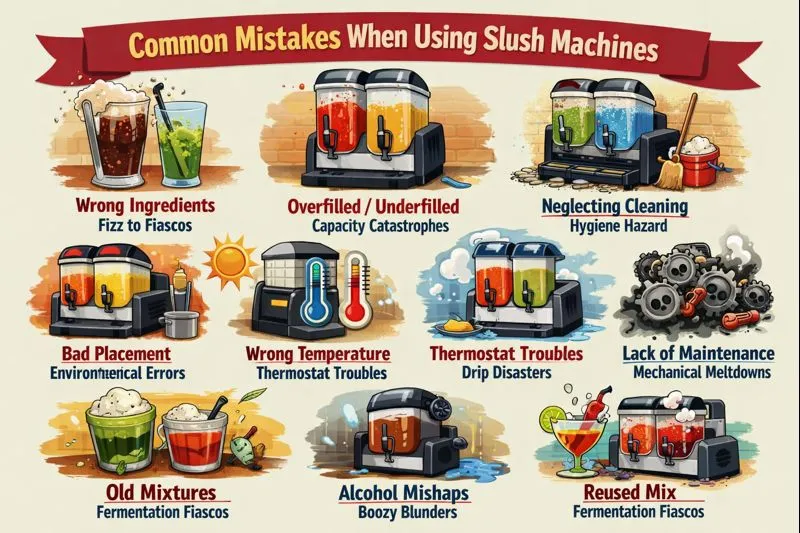
- Incorrect Mixture Ratios – The Foundation of Freezing Failures
- Using Incompatible Ingredients – From Fizz to Fiascos
- Overfilling or Underfilling the Tanks – Capacity Catastrophes
- Neglecting Regular Cleaning – The Hygiene Hazard
- Skipping Lubrication and Maintenance – Mechanical Meltdowns
- Poor Placement and Ventilation – Environmental Errors
- Ignoring Temperature Settings – Thermostat Troubles
- Not Addressing Leaks Promptly – Drip Disasters
- Mishandling Alcoholic Beverages – Boozy Blunders
- Reusing Old Mixtures – Fermentation Fiascos
- Mastering Your Slush Machine for Long-Term Success
Incorrect Mixture Ratios – The Foundation of Freezing Failures
One of the most prevalent errors with slush machines is getting the syrup-to-water ratio wrong. Slush relies on a precise balance of sugar, water, and flavorings to achieve that signature icy-yet-smooth texture. If the sugar content (measured in Brix degrees) is too high, the mixture won’t freeze properly, resulting in a syrupy liquid that never solidifies. Conversely, too little sugar can cause the mix to turn into a solid block of ice, straining the machine’s motor and augers. Experts recommend a Brix reading between 13-15 degrees for optimal freezing, which you can check with a refractometer.
Why does this happen? Many users eyeball measurements or follow generic recipes without adjusting for their specific syrup or machine. For instance, standard non-alcoholic slush syrups often require a 1:5 or 1:6 ratio (one part syrup to five or six parts water), but deviations can lead to non-freezing or over-freezing. In commercial settings, rushing to refill tanks during peak hours exacerbates this issue.
Consequences include wasted ingredients, inconsistent drinks that disappoint customers, and potential motor burnout from overworking the machine. To avoid this:
- Always use a measuring cup or scale for accuracy.
- Test Brix levels: Invest in a portable refractometer (under $20 online) and aim for 13-15.
- Adjust for variations: If using homemade syrups, start with less sugar and add incrementally while testing.
- For alcoholic mixes, remember alcohol lowers the freezing point, so increase sugar slightly to compensate.
By nailing the ratio, you’ll get perfect slush in 30-60 minutes, depending on your machine. This simple step can prevent 80% of freezing-related complaints.
Using Incompatible Ingredients – From Fizz to Fiascos
Not all liquids are created equal for slush machines. A common blunder is pouring in the wrong ingredients, such as carbonated sodas, pulpy juices, or thick smoothies, which can wreak havoc on the system. Carbonation causes excessive foaming and overflow, creating a sticky mess and potentially damaging internal components. Pulpy or fibrous ingredients like fresh fruit purees can clog augers and spouts, leading to uneven freezing or complete blockages.
This mistake often occurs when users experiment without checking compatibility. For example, trying to slush a cola might seem fun, but the bubbles expand during freezing, causing spills and reduced efficiency. Dairy-heavy mixes without proper dilution can also separate or curdle.
The fallout? Messy cleanups, inconsistent textures (e.g., icy chunks instead of smooth slush), and shortened machine lifespan. Health risks arise if clogs harbor bacteria. Here’s how to steer clear:
- Stick to recommended liquids: Opt for non-carbonated juices, flavored waters, or dedicated slush syrups.
- Filter ingredients: Strain pulpy juices before adding.
- Check machine specs: Home models like Ninja SLUSHi handle milkshakes, but commercial ones may not.
- Experiment safely: Start small and monitor for foaming or clogs.
Using the right ingredients ensures hygienic, delicious results every time.
Overfilling or Underfilling the Tanks – Capacity Catastrophes
Overfilling the hopper beyond the max line is a rookie error that reduces freezing efficiency and causes spills. On the flip side, underfilling (below half capacity) can lead to over-freezing, as the mixture doesn’t circulate properly, forming ice blocks that stress the auger.
Users often overfill in haste to maximize output, especially in busy environments, or underfill to save mix. But this disrupts the machine’s balance, leading to uneven slush, leaks, or motor strain.
To prevent this:
- Follow fill lines: Most machines have clear max/min indicators—stick to them (e.g., 51 oz for some home models).
- Batch wisely: For larger needs, run multiple cycles instead of overloading.
- Monitor levels: Keep tanks at least half full during operation.
- Adjust for expansion: Frozen mixtures expand slightly, so leave headspace.
Proper filling promotes even freezing and extends equipment life.
Neglecting Regular Cleaning – The Hygiene Hazard
Skipping daily or weekly cleans is arguably the most dangerous mistake, allowing sugar residue, bacteria, and mold to build up. Leftover mix ferments, creating off-flavors and health risks like food poisoning.
Many overlook this because cleaning seems time-consuming, but it’s essential for food safety and performance. Dirty machines lead to clogs, odd tastes, and regulatory issues in commercial settings.
Implement a routine:
- Daily: Empty tanks, rinse with warm water, wipe exteriors, and clean drip trays.
- Weekly: Disassemble parts, soak in soapy water, scrub, rinse, and sanitize with food-grade products.
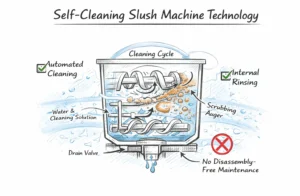
- Use self-clean functions if available (e.g., on Ninja models).
- Air dry components to prevent moisture buildup.
Regular cleaning keeps your slush safe and tasty.
Skipping Lubrication and Maintenance – Mechanical Meltdowns
Failing to lubricate seals, gaskets, and moving parts weekly causes friction, noise, and leaks. Dust on the condenser restricts airflow, leading to overheating or non-freezing.
This oversight happens when users treat machines like set-it-and-forget-it appliances. Consequences include squealing sounds, reduced efficiency, and premature wear.
Tips to avoid:
- Lubricate with food-grade grease on O-rings, taps, and gearboxes weekly.
- Clean condenser coils with a brush or vacuum.
- Inspect for wear monthly: Replace seals annually.
- Log maintenance to track schedules.
Proactive care prevents breakdowns.
Poor Placement and Ventilation – Environmental Errors
Placing the machine near heat sources like ovens or in direct sunlight raises internal temperatures, disrupting freezing. Insufficient clearance (less than 20-40 cm) blocks airflow, causing overheating.
Common in cramped kitchens or outdoor setups, this leads to inconsistent slush and motor strain.
Solutions:
- Choose cool, ventilated spots away from heat.
- Ensure ample space around vents.
- Avoid wet areas to prevent electrical hazards.
- For outdoors, use covers against elements.
Optimal placement enhances performance.
Ignoring Temperature Settings – Thermostat Troubles
Not adjusting or monitoring temps (-2°C to -5°C ideal) results in slush that’s too soft or icy. Some machines have presets—ignoring them leads to manual guesswork.
Users often set it once and forget, but ambient conditions change.
Fix it by:
- Check and calibrate regularly.
- Use night mode to defrost overnight.
- Adjust for mix type (e.g., alcoholic needs cooler settings).
Precise temps yield perfect consistency.
Not Addressing Leaks Promptly – Drip Disasters
Leaks from taps or overflows signal damaged seals or stiff mechanisms. Ignoring them wastes product and risks slips.
Often due to wear or improper assembly.
Remedy:
- Lubricate taps and check seals.
- Replace damaged parts immediately.
- Distinguish condensation (clear) from leaks (colored).
Quick action prevents bigger issues.
Mishandling Alcoholic Beverages – Boozy Blunders
For frozen cocktails, not diluting properly (adding 20% water) or balancing alcohol (which depresses freezing) causes poor slush. High alcohol without extra sugar won’t freeze.
Bar owners’ experiment without testing Brix.
Tips:
- Dilute recipes and check Brix.
- Chill mixes beforehand for faster freezing.
- Limit alcohol to 15-20% ABV.
Master this for crowd-pleasing frozen drinks.
Reusing Old Mixtures – Fermentation Fiascos
Topping up old mix with new leads to fermentation, sour tastes, and bacteria.
Common in cost-saving efforts.
Avoid by:
- Discard leftovers daily.
- Mix fresh batches.
- Store syrups properly.
Freshness ensures safety.
Mastering Your Slush Machine for Long-Term Success
Avoiding these common mistakes— from ratio errors to maintenance lapses—transforms your slush machine from a potential headache into a reliable asset. Prioritize accuracy, cleanliness, and routine checks to enjoy flawless frozen drinks while extending your equipment’s life. Remember, consistency comes from practice and adherence to guidelines. For more tips, consult your manual or professionals. Happy slushing!