Making slushies at home sounds simple—until the texture comes out wrong, the flavor tastes weak, or the machine refuses to freeze properly. Many people searching how to make slushie syrup try blending juice with ice, only to end up with watery crushed ice instead of that smooth, spoon-able slush consistency found in stores. The real issue isn’t the machine—it’s the syrup.
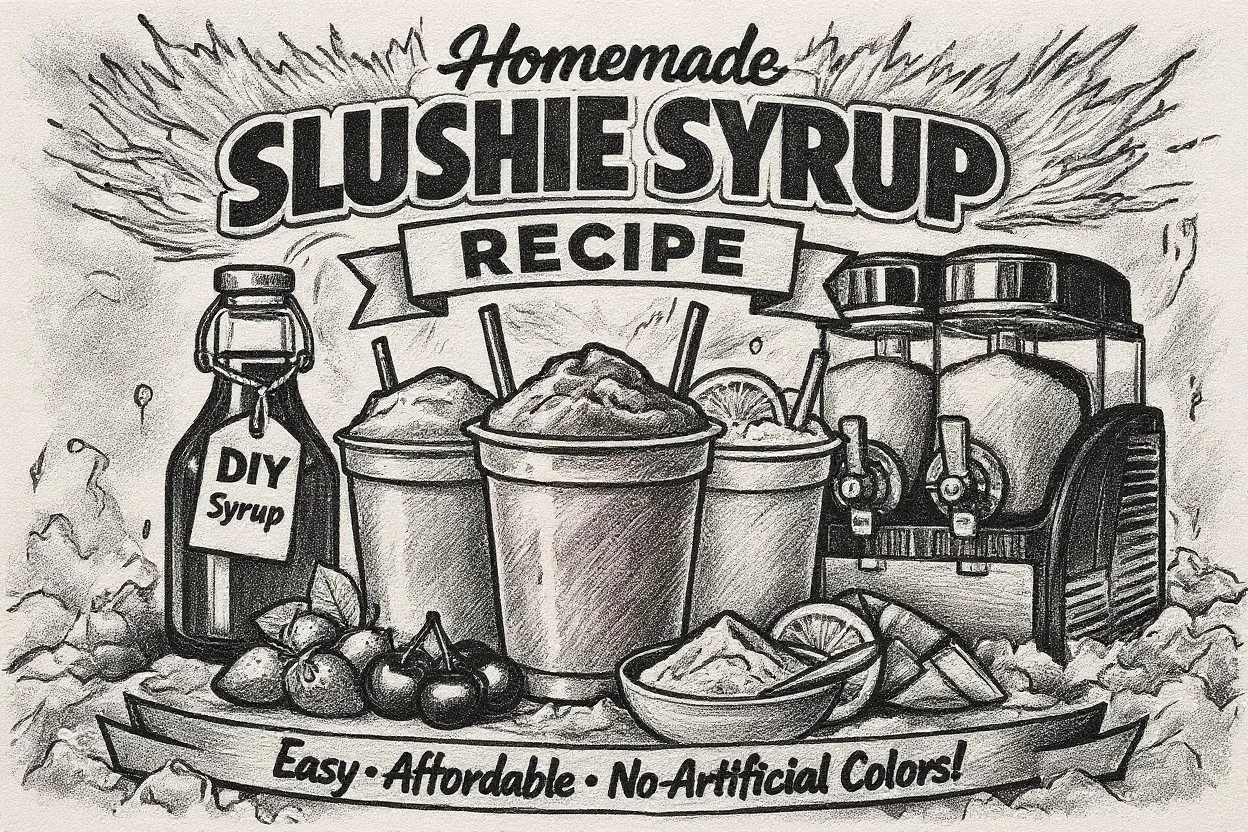
Store-bought slush syrups can be expensive, overly sweet, or loaded with artificial colors. That’s why learning how does you make slushie syrup from scratch is the key to better flavor, proper freezing, and full ingredient control. A well-balanced slushie syrup homemade recipe helps your slush machine freeze evenly, protects internal components, and delivers professional results every time.
In this guide, you’ll learn how to make slushie syrup for a slushie machine, including exact ratios, dye-free options, DIY variations, and machine-friendly tips.
What Is Slush Syrup?
Slush syrup is a concentrated, sweetened flavor base designed to be diluted with water and frozen into a semi-frozen beverage. Unlike regular juice, slush syrup contains a precise sugar-to-water ratio that controls freezing behavior.
Sugar is critical. Without enough sugar, the mixture freezes solid. With too much sugar, it won’t freeze at all. This balance is why people fail when attempting DIY slushie syrup without understanding the science behind it.
A properly made homemade slushie syrup follows the same principle as commercial syrups—but with cleaner ingredients and customizable flavors.
Why Make Homemade Slush Syrup?
People choose slush syrup homemade for several practical reasons:
- Cost Control – Learning how to make slushie syrup at home is far cheaper than buying commercial syrups, especially for regular use or small businesses.
- Ingredient Transparency – You can make dye-free slush syrup, avoid preservatives, and control sweetness.
- Custom Flavors – From classic cherry to mango, lemonade, or cola, DIY slushie syrup allows endless creativity.
- Machine Performance – Proper syrup ratios reduce overfreezing, underfreezing, and mechanical strain.
Basic Homemade Slush Syrup Recipe (Core Formula)
This core recipe answers the most common question: how do you make slushie syrup that actually works in a machine?
Ingredients:
- 2 cups granulated sugar
- 1 cup water
- 2 teaspoons flavor extract or 1 cup fruit juice concentrate
- Food coloring (optional)
- 1 tablespoon lemon juice (optional, for brightness)
Instructions:
- Add sugar and water to a saucepan.
- Heat on medium, stirring continuously until sugar fully dissolves.
- Do not boil aggressively—gentle heat is enough.
- Remove from heat once the liquid turns clear.
- Stir in flavor extract or fruit concentrate.
- Add lemon juice if using.
- Allow the syrup to cool completely.
- Store in an airtight bottle in the refrigerator.
This creates a high-concentration syrup that can later be diluted for slush use.
Correct Slush Syrup Mixing Ratio (Very Important)
The syrup alone is not used directly in a slush machine.
Standard Slush Ratio:
1 part syrup : 5–6 parts water
- For sweeter slush: 1:5
- For balanced texture: 1:6
This ratio keeps the freezing point correct and prevents ice block formation. If you feel it’s tricky when using soda or alcohol based syrup you can use our slushie syrup ratio calculator, we have designed it in a way that cover all related aspects which is necessary for a perfect slushie.
Caution: Using syrup without dilution can damage augers, freeze barrels solid, and overload compressors.
Fruit-Based Homemade Slush Syrup (Dye-Free Option)
If you want a dye-free slush syrup, fruit-based recipes are ideal.
Ingredients:
- 2 cups fresh fruit (strawberry, mango, pineapple, etc.)
- 1½ cups sugar
- 2 cup water (water ratio must be equal to fruit quantity)
- 1 tablespoon lemon juice
Instructions:
- Blend fruit into a smooth puree.
- Combine puree, sugar, and water in a saucepan.
- Heat gently until sugar dissolves.
- Simmer for 5–8 minutes (do not boil hard).
- Strain if you want a smoother syrup.
- Cool completely before storage.
Fruit syrups may need slightly higher dilution (1:6) due to natural sugars and pulp.
Sugar Alternatives (And Their Effects)
Not all sweeteners behave the same in slush mixtures.
White Sugar (Best Choice)
- Predictable freezing behavior
- Smooth texture
- Ideal for machines
Corn Syrup / Glucose
- Improves smoothness
- Reduces ice crystals
- Often used in commercial syrups
Honey
- Strong flavor
- Higher freezing point
- Requires testing
Stevia / Artificial Sweeteners
- Not recommended for slush machines
- Causes solid freezing
For reliable results, granulated sugar or glucose syrup is strongly recommended.
Storage & Shelf Life
- Refrigerated syrup lasts 2–3 weeks
- Fruit syrups last 7–10 days
- Freeze extra syrup in airtight containers for long-term use
Always label flavors and dates.
You might also like: Shelf Life & Storage Guide for Slush Syrups
Pro Tips for Slush Machine Users
- Filter syrup before pouring to avoid pulp blockage
- Clean tanks weekly to prevent sugar buildup
- Never adjust freezing controls to compensate for bad syrup
- Test small batches before full tank fills
Correct syrup protects seals, augers, and cooling systems.
Final Thoughts: Perfect Slush Starts with the Syrup
A slush machine is only as good as the mixture inside it. Once you truly understand how to make slushie syrup, you gain control over texture, flavor, freezing performance, and machine health. Whether you’re making drinks at home or running a small operation, a properly balanced homemade slushie syrup delivers smoother slush, richer taste, and professional-quality results—without artificial dyes or unnecessary costs.
Homemade doesn’t mean compromised—it means controlled, customizable, and consistently better.