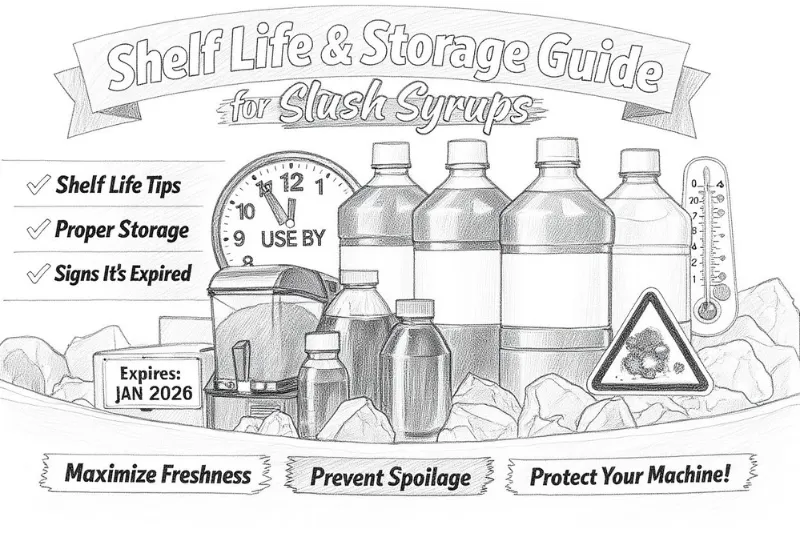
Slush syrups are the heart of every perfect frozen drink. No matter how advanced your slush machine is, poor syrup storage or expired concentrate can ruin flavor, texture, and even machine performance. Many operators face issues like weak taste, separation, mold growth, or slush that simply won’t freeze—often without realizing the real culprit is improper syrup handling.
This guide breaks down how long slush syrups last, how to store them correctly, and how to tell when they’ve gone bad, so you can protect product quality, reduce waste, and keep customers coming back for more.
- What Is Slush Syrup?
- Shelf Life of Slush Syrups (At a Glance)
- Does Slush Syrup Expire?
- How to Store Unopened Slush Syrup
- How to Store Opened Slush Syrup
- Shelf Life After Mixing with Water
- Signs Slush Syrup Has Gone Bad
- Can Expired Slush Syrup Damage Your Machine?
- Sugar-Free Slush Syrups: Special Storage Rules
- Best Storage Tips for Commercial Use (Pro Tips)
- Can You Freeze Slush Syrup?
- Final Thoughts
What Is Slush Syrup?
Slush syrup (also called slush concentrate) is a flavored liquid mixed with water to create frozen beverages in slushie machines. It typically contains:
- Sugar or sweeteners
- Flavoring agents
- Food coloring
- Acids (like citric acid)
- Preservatives (in many commercial brands)
Because syrups are concentrated and acidic, they usually have a longer shelf life than ready-to-drink beverages—but only when stored correctly.
Shelf Life of Slush Syrups (At a Glance)
| Syrup Type | Unopened Shelf Life | Opened Shelf Life |
|---|---|---|
| Commercial slush syrup | 12–24 months | 6–12 months |
| Sugar-free slush syrup | 9–18 months | 3–6 months |
| Natural / organic syrup | 6–12 months | 1–3 months |
| Homemade syrup | N/A | 7–14 days (refrigerated) |
Important: Always check the manufacturer’s label. Brand formulations and preservative levels vary.
Does Slush Syrup Expire?
Yes—slush syrup does expire, even if it looks fine.
Over time, exposure to air, heat, and contamination can cause:
- Flavor breakdown
- Color fading or darkening
- Separation or thickening
- Mold or fermentation
Expired syrup doesn’t just taste bad—it can damage your slush machine, clog augers, and affect freezing consistency.
How to Store Unopened Slush Syrup
Proper storage starts the moment syrup arrives at your store or warehouse.
Ideal Conditions for Unopened Bottles
- Temperature: 10°C–25°C (50°F–77°F)
- Location: Cool, dry, and dark place
- Sunlight: Avoid direct sunlight completely
- Position: Store bottles upright and sealed
Avoid storage near:
- Heat sources
- Freezers
- Chemicals or cleaning agents
When kept sealed and stored correctly, unopened syrup can easily last up to two years.
How to Store Opened Slush Syrup
Once opened, syrup becomes vulnerable to air exposure and contamination, which drastically shortens its lifespan.
Best Practices After Opening
- Tightly reseal the cap after every use
- Store at room temperature (unless manufacturer says otherwise)
- Keep away from moisture and heat
- Never return mixed or contaminated syrup to the original bottle
Should You Refrigerate Slush Syrup?
- Commercial syrups: Usually not required
- Natural or homemade syrups: Refrigeration strongly recommended
Refrigerating standard commercial syrup won’t hurt it, but cold storage can cause thickening or crystallization, especially in high-sugar formulas.
Shelf Life After Mixing with Water
Once syrup is diluted with water and poured into a slush machine, the clock speeds up.
Mixed Slush Shelf Life
- In machine (with regular use): 3–5 days
- In machine (unused): 24–48 hours
- In sealed container (refrigerated): 2–3 days
Leaving mixed slush overnight for multiple days increases the risk of:
- Bacterial growth
- Separation
- Sour or flat taste
Daily cleaning and fresh mixing are best practices for quality and hygiene.
Signs Slush Syrup Has Gone Bad
Never rely on taste alone. Watch for these warning signs:
Visual Changes
- Cloudy appearance
- Mold spots (black, white, or green)
- Thick clumps or heavy separation
Smell & Texture
- Sour or fermented odor
- Unusual bitterness
- Sticky or slimy consistency
If you notice any of these, discard the syrup immediately.
Can Expired Slush Syrup Damage Your Machine?
Yes—and this is often overlooked.
Expired or degraded syrup can:
- Clog augers and cooling barrels
- Prevent proper freezing
- Increase motor strain
- Cause inconsistent slush texture
In commercial settings, this leads to higher repair costs and downtime, making proper syrup rotation critical.
Sugar-Free Slush Syrups: Special Storage Rules
Sugar-free syrups use artificial sweeteners, which are less stable than sugar.
Key differences:
- Shorter shelf life
- More sensitive to heat
- Flavor degrades faster once opened
Pro Tip: Always label sugar-free syrups with the opening date and rotate stock faster than standard syrups.
Best Storage Tips for Commercial Use (Pro Tips)
If you run a café, cinema, or slush bar, follow these professional storage habits:
- Use FIFO (First In, First Out) inventory rotation
- Label bottles with opening dates
- Never mix old syrup with new syrup
- Clean dispensing pumps weekly
- Store backup stock in original packaging
These steps not only improve taste but also extend machine lifespan.
Can You Freeze Slush Syrup?
Freezing is not recommended.
Why?
- Sugar crystallization
- Flavor separation
- Bottle expansion and leakage
Once thawed, frozen syrup rarely returns to its original consistency and can cause freezing issues in machines.
Final Thoughts
Understanding the shelf life and storage of slush syrups is essential for consistent flavor, smooth texture, and reliable machine performance. Whether you’re running a busy commercial operation or a small slush setup, correct storage practices help reduce waste, protect equipment, and deliver better drinks every time.
At Slush Web, we believe great slush starts long before the machine turns on—it starts with how you store your syrup.