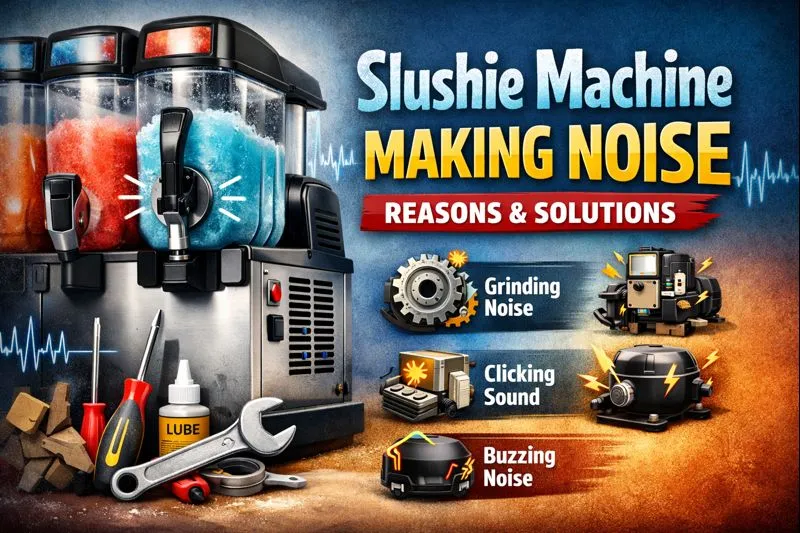
A slushie machine is designed to run smoothly and quietly, producing frozen drinks without disturbing customers or staff. But when your slushie machine starts making unusual noises—such as grinding, clicking, buzzing, or squeaking—it quickly becomes a problem. These sounds can worry operators, interrupt business, and often signal hidden mechanical or maintenance issues.
Ignoring these noises can lead to bigger failures, higher repair costs, poor slush consistency, and even complete machine shutdown during peak hours. For commercial settings like cafes, kiosks, events, and beverage shops, this can mean lost sales and unhappy customers.
The good news is that most slushie machine noises have clear causes and practical solutions. In this guide, we’ll explain why your slushie machine is making noise, what each sound means, and how to fix it step by step—so your machine runs quietly, efficiently, and reliably again.
Why Is My Slushie Machine Making Noise?
A slushie machine has several moving and cooling components working together: the motor, auger (spiral), condenser fan, compressor, seals, and refrigeration system. Noise usually occurs when one of these parts is dirty, worn out, misaligned, or under stress.
Below are the most common noise types, their reasons, and detailed solutions.
1. Grinding or Crunching Noise
Reason
A grinding or crunching sound often comes from the auger (spiral shaft) inside the barrel. This usually happens when:
- The slush mixture is too thick
- The sugar-to-water ratio is incorrect (not following the recommended 6:1 ratio)
- Ice buildup is forming around the auger
- Bearings or seals are worn out
The motor struggles to rotate the auger, causing friction and noise.
You might also like: How a Slushie Machine Works
Solution
- Turn off the machine immediately to prevent motor damage
- Drain the slush mixture and allow the barrel to defrost
- Refill using the correct syrup-to-water ratio
- Inspect the auger for cracks, dryness, or damage
- Lubricate food-grade seals and bearings if required
- Replace worn auger seals or shaft if grinding continues
Prevention Tip: Never run the machine with an over-frozen or under-mixed beverage.
2. Clicking or Ticking Noise
Reason
Clicking noises usually come from the compressor relay or thermostat system. This happens when:
- The machine is overheating
- The condenser coil is dirty or blocked
- Voltage supply is unstable
- The compressor is short-cycling
The clicking sound is often the safety relay turning the compressor on and off repeatedly.
Solution
- Unplug the machine and let it cool down for 20–30 minutes
- Clean the condenser coil using a soft brush or compressed air
- Check airflow clearance around the machine (minimum 6–8 inches)
- Ensure the machine is connected to a dedicated power outlet
- If clicking continues, contact a technician to test the compressor relay
Prevention Tip: Clean the condenser weekly to avoid overheating.
3. Loud Fan or Whirring Noise
Reason
A loud whirring or roaring sound usually comes from the condenser fan. Common causes include:
- Dust and grease buildup on fan blades
- Bent or loose fan blades
- Restricted ventilation
- Worn fan motor bearings
When airflow is restricted, the fan works harder and becomes noisy.
Solution
- Power off and unplug the machine
- Remove the side or rear panel
- Clean fan blades and surrounding vents thoroughly
- Tighten loose screws or mounts
- Replace the fan motor if the bearings are worn
Prevention Tip: Keep the machine away from walls, heat sources, and grease-heavy environments.
4. Squeaking or Screeching Noise
Reason
Squeaking sounds usually indicate dry or worn seals, bushings, or bearings. This often happens when:
- Seals are not lubricated
- The machine runs without enough mixture
- Regular maintenance is skipped
Dry friction between moving parts causes high-pitched noise.
Solution
- Drain the barrel and disassemble internal components
- Clean all parts with warm water
- Apply food-safe lubricant to seals and bushings
- Replace cracked or hardened seals
- Never operate the machine when the barrel is empty
Prevention Tip: Lubricate seals during every scheduled cleaning.
5. Buzzing or Humming Noise
Reason
A buzzing or low humming noise is commonly related to the compressor or electrical components. Causes include:
- Loose electrical connections
- Failing capacitor
- Compressor under heavy load
- Low voltage supply
While some humming is normal, loud or irregular buzzing is not.
Solution
- Check that the machine is plugged firmly into the outlet
- Avoid extension cords or shared power sources
- Inspect wiring for looseness (technician recommended)
- Replace faulty capacitors if diagnosed
- If the compressor buzzes but won’t start, stop using the machine
Prevention Tip: Always use a stable power supply rated for commercial equipment.
6. Rattling or Vibrating Noise
Reason
Rattling noises often come from loose panels, screws, or internal components. This can happen due to:
- Machine movement during operation
- Uneven flooring
- Long-term vibration loosening screws
While not always dangerous, it can worsen over time.
Solution
- Place the machine on a level, stable surface
- Tighten all external and internal screws
- Check drip trays, panels, and covers
- Use rubber pads under the machine if needed
Prevention Tip: Inspect screws and mounts during monthly maintenance.
7. Gurgling or Hissing Sound
Reason
Gurgling or hissing sounds are often related to the refrigeration system. Common reasons include:
- Normal refrigerant flow (light sound is normal)
- Refrigerant imbalance
- Internal blockage
- Moisture in the cooling system
Loud or continuous hissing may indicate a refrigerant issue.
Solution
- Observe whether cooling performance is affected
- If slush is forming properly, light gurgling may be normal
- If freezing is weak or uneven, stop using the machine
- Contact a certified technician to inspect refrigerant levels
Prevention Tip: Never attempt refrigerant repairs yourself.
You might also like: Slushie Machine Not Freezing – Causes & Fixes
8. Knocking or Thumping Noise
Reason
Knocking sounds may come from:
- A misaligned compressor
- Loose internal mounts
- Sudden pressure changes in the cooling cycle
This noise often becomes louder during startup or shutdown.
Solution
- Turn off the machine and inspect mounting bolts
- Ensure the machine is level
- If noise persists, compressor mounts may need replacement
- Seek professional service for internal compressor issues
Prevention Tip: Avoid moving the machine while it is running.
How to Prevent Slushie Machine Noise (Maintenance Checklist)
Regular maintenance is the key to quiet operation:
- Clean condenser coils weekly
- Use the correct syrup-to-water ratio
- Lubricate seals during cleaning
- Keep ventilation areas clear
- Never overfill or underfill barrels
- Perform routine diagnostics
- Replace worn spare parts early
You might also like: Common Mistakes When Using Slush Machine
When to Call a Professional Technician
You should seek professional help if:
- Noise is coming directly from the compressor
- Electrical buzzing is constant
- The machine stops freezing properly
- You notice burning smells or repeated shutdowns
Early intervention prevents costly repairs and machine replacement.
Final Verdict
A slushie machine making noise is not something to ignore. Each sound—grinding, clicking, buzzing, or squeaking—is a warning sign that something needs attention. Fortunately, most noise problems are caused by poor maintenance, airflow issues, incorrect mixture ratios, or worn parts, all of which are manageable with the right approach.
By understanding the reason behind each noise and applying the correct solution, you can extend your machine’s lifespan, maintain consistent slush quality, improve efficiency, and keep your business running smoothly.
A quiet slushie machine is a healthy slushie machine—and good maintenance is the key to both.