
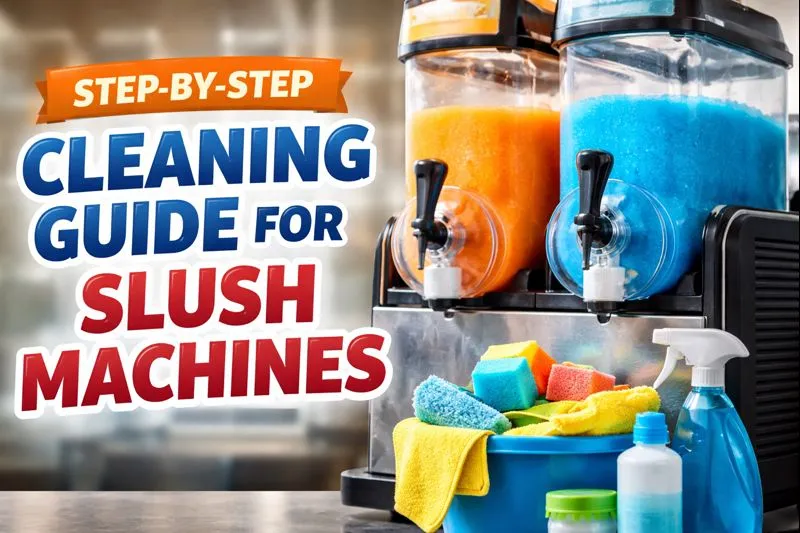
A slush machine is designed to deliver icy, smooth, perfectly textured drinks — but only when it’s clean, well-maintained, and hygienic. Many users focus heavily on flavors, syrups, and freezing performance, yet ignore the single most important factor behind taste, safety, and machine lifespan that is proper cleaning.
Over time, syrup residue, sugar crystals, condensation, and dust silently build up inside tanks, augers, seals, and condenser areas. This buildup doesn’t just affect drink quality — it slowly damages internal components, restricts airflow, increases energy consumption, and leads to costly breakdowns. Worse, poor hygiene can create serious food-safety risks, especially in commercial environments.
The good news? With the right cleaning routine, you can keep your slush machine running efficiently for years, maintain consistent texture, and ensure every drink tastes fresh and safe. This complete guide breaks everything down into daily, weekly, and monthly checklists, explains how to clean tanks, augers, and the main body step by step, and shares pro-level tips to extend your machine’s lifespan.
Whether you run a café, convenience store, event setup, or use a slushie machine at home, this guide covers everything you need.
- Why Cleaning a Slush Machine Matters More Than You Think
- Daily Slush Machine Cleaning Checklist (Must-Do Routine)
- Weekly Slush Machine Cleaning Checklist (Deep Hygiene)
- Monthly Slush Machine Cleaning Checklist (Performance & Longevity)
- Extending Slush Machine Lifespan (Pro Tips)
- Final Thoughts: Clean Machines Make Better Slush
Why Cleaning a Slush Machine Matters More Than You Think
Cleaning isn’t just about appearance — it directly impacts performance, safety, and cost efficiency.
Here’s what happens when cleaning is ignored:
- Sugar syrup hardens and blocks the cooling cycle
- Augers struggle to rotate, causing motor strain
- Seals dry out and start leaking
- Condenser coils collect dust, leading to overheating
- Drinks lose proper consistency and freeze unevenly
- Bacteria and mold can grow inside tanks
On the other hand, a well-cleaned slush machine delivers:
- Smooth, consistent texture every time
- Faster freezing and better refrigeration efficiency
- Longer equipment lifespan
- Lower repair and maintenance costs
- Safe, hygienic beverages
That’s why professional operators treat cleaning as part of daily operation, not an occasional task.
Daily Slush Machine Cleaning Checklist (Must-Do Routine)
Daily cleaning is the foundation of slush machine hygiene. It prevents sugar buildup, bacterial growth, and texture issues — especially if the machine runs for long hours.
Daily Cleaning Goals
- Remove leftover syrup and mixture
- Prevent stickiness inside tanks and taps
- Maintain drink flavor and clarity
- Stop early formation of blockages
Daily Checklist (Quick Overview)
- Drain remaining slush or liquid
- Rinse tanks with warm water
- Clean dispensing taps
- Wipe exterior surfaces
- Dry visible moisture and condensation
Step-by-Step Daily Cleaning Process
1. Drain the Machine Completely
At the end of the day, never leave syrup or slush inside overnight unless the manufacturer explicitly allows it.
- Switch the machine to defrost or off mode
- Dispense remaining slush into cups or containers
- Drain leftover liquid through the tap
Leaving sugar mixture overnight leads to:
- Sticky residue
- Crystal formation
- Bacterial growth
2. Rinse Tanks with Warm Water
- Fill each tank with warm (not hot) water
- Let the auger rotate for 2–3 minutes
- Dispense the water completely
This loosens syrup residue stuck to the barrel walls and auger.
Tip: Never use boiling water — it can warp plastic tanks and damage seals.
3. Clean the Dispensing Taps
Taps are one of the dirtiest parts of a slush machine.
- Remove tap handles if detachable
- Rinse with warm water
- Use a soft brush to clean internal grooves
- Reassemble once fully dry
Sticky taps are often the first sign of poor daily cleaning.
4. Wipe Exterior & Control Panel
Use a damp microfiber cloth to clean:
- Control buttons
- Tank exteriors
- Drip trays
- Front panel
Avoid spraying water directly onto electrical parts.
5. Dry Condensation & Spills
Moisture left on the machine encourages:
- Mold growth
- Rust on metal frames
- Electrical issues
Always finish daily cleaning by wiping the machine dry.
Weekly Slush Machine Cleaning Checklist (Deep Hygiene)
Weekly cleaning goes deeper — this is where you disassemble key components to remove hidden buildup.
Weekly Cleaning Goals
- Remove sugar film and residue
- Clean augers and seals
- Maintain smooth rotation
- Prevent leaks and noises
Weekly Checklist (Quick Overview)
- Full tank removal and washing
- Auger and spiral cleaning
- Seal inspection and cleaning
- Tap disassembly
- Airflow and ventilation check
Step-by-Step Weekly Cleaning Guide
1. Power Off and Unplug the Machine
Safety always comes first.
- Turn off the unit
- Unplug from the outlet
- Allow machine to rest for 10–15 minutes
This prevents electric shock and protects internal components.
2. Remove and Clean Tanks
- Lift tanks carefully from the machine
- Empty any remaining liquid
- Wash tanks with:
- Warm water
- Food-safe mild detergent
- Soft sponge or cloth
Avoid abrasive brushes — they scratch plastic and attract residue later.
Rinse thoroughly to remove detergent traces.
3. Clean Augers (Spirals)
Augers control slush texture. Dirty augers cause:
- Underfreezing
- Uneven consistency
- Clicking or squeaking noises
Steps:
- Remove augers from tanks
- Soak in warm water
- Use a soft brush to clean grooves
- Rinse and air dry
Pay attention to syrup crystals trapped near the shaft.
4. Inspect and Clean Seals & O-Rings
Seals prevent leakage and pressure loss.
- Remove rubber seals carefully
- Wash with warm water only
- Check for cracks, dryness, or stiffness
If seals feel brittle, replace them — damaged seals cause leaks and poor freezing.
5. Deep Clean Dispensing Taps
Weekly tap cleaning is non-negotiable.
- Fully disassemble tap parts
- Soak in warm water
- Brush inner channels
- Rinse and dry
Sticky taps increase wear and can snap over time.
6. Clean Air Vents and Exterior Ventilation
Restricted airflow = overheating.
- Locate ventilation grills
- Use a dry brush or vacuum
- Remove dust buildup
Never block airflow — it reduces refrigeration efficiency dramatically.
Monthly Slush Machine Cleaning Checklist (Performance & Longevity)
Monthly cleaning focuses on machine health, not just hygiene.
Monthly Cleaning Goals
- Prevent overheating
- Improve energy efficiency
- Extend compressor lifespan
- Avoid unexpected shutdowns
Monthly Checklist (Quick Overview)
- Condenser coil cleaning
- Fan inspection
- Full internal inspection
- Noise diagnostics
- Temperature consistency check
Step-by-Step Monthly Maintenance Guide
1. Clean the Condenser Coil
The condenser releases heat — if it’s dirty, the machine overheats.
Steps:
- Unplug the machine
- Locate condenser coil (rear or side)
- Use a condenser brush or soft vacuum
- Remove dust and grease
A dirty condenser can:
- Increase power usage
- Cause underfreezing
- Trigger automatic shutdowns
2. Inspect Cooling Fan
- Check if fan spins freely
- Listen for rattling or squeaking
- Remove dust buildup
A noisy fan often means imbalance or obstruction.
3. Check Refrigeration Performance
- Fill tanks with water
- Run the machine
- Observe freezing time
Slow freezing may indicate:
- Refrigerant issues
- Poor airflow
- Internal blockage
4. Inspect Electrical Cords & Outlet
- Look for worn cables
- Ensure outlet isn’t overheating
- Avoid extension cords
Electrical safety is part of maintenance.
Extending Slush Machine Lifespan (Pro Tips)
1. Follow the Correct Syrup-to-Water Ratio
Wrong ratios (notably ignoring 6:1) cause:
- Overworking motors
- Ice blockages
- Poor freezing
Always follow manufacturer guidelines.
2. Never Run the Machine Dry
Running without liquid:
- Damages seals
- Overheats augers
- Reduces lifespan
3. Avoid Overnight Operation (Unless Approved)
Continuous overnight operation:
- Builds frost
- Increases wear
- Wastes energy
If allowed, switch to standby or defrost mode.
4. Schedule Preventive Maintenance
- Replace seals yearly
- Clean condenser monthly
- Keep spare parts available
Prevention costs less than repair.
5. Train Staff Properly (Commercial Use)
Human error causes most failures.
Train staff on:
- Cleaning routines
- Syrup ratios
- Shutdown procedures
Final Thoughts: Clean Machines Make Better Slush
A slush machine is not a “set it and forget it” appliance. It’s a precision beverage machine that depends on cleanliness, airflow, and proper maintenance to perform at its best.
By following:
- Daily hygiene routines
- Weekly deep cleaning
- Monthly performance checks
You’ll enjoy:
- Better-tasting slushies
- Longer machine lifespan
- Lower repair costs
- Higher customer satisfaction
For Slush Web readers, this cleaning guide isn’t just advice — it’s the foundation of reliable slush machine ownership.