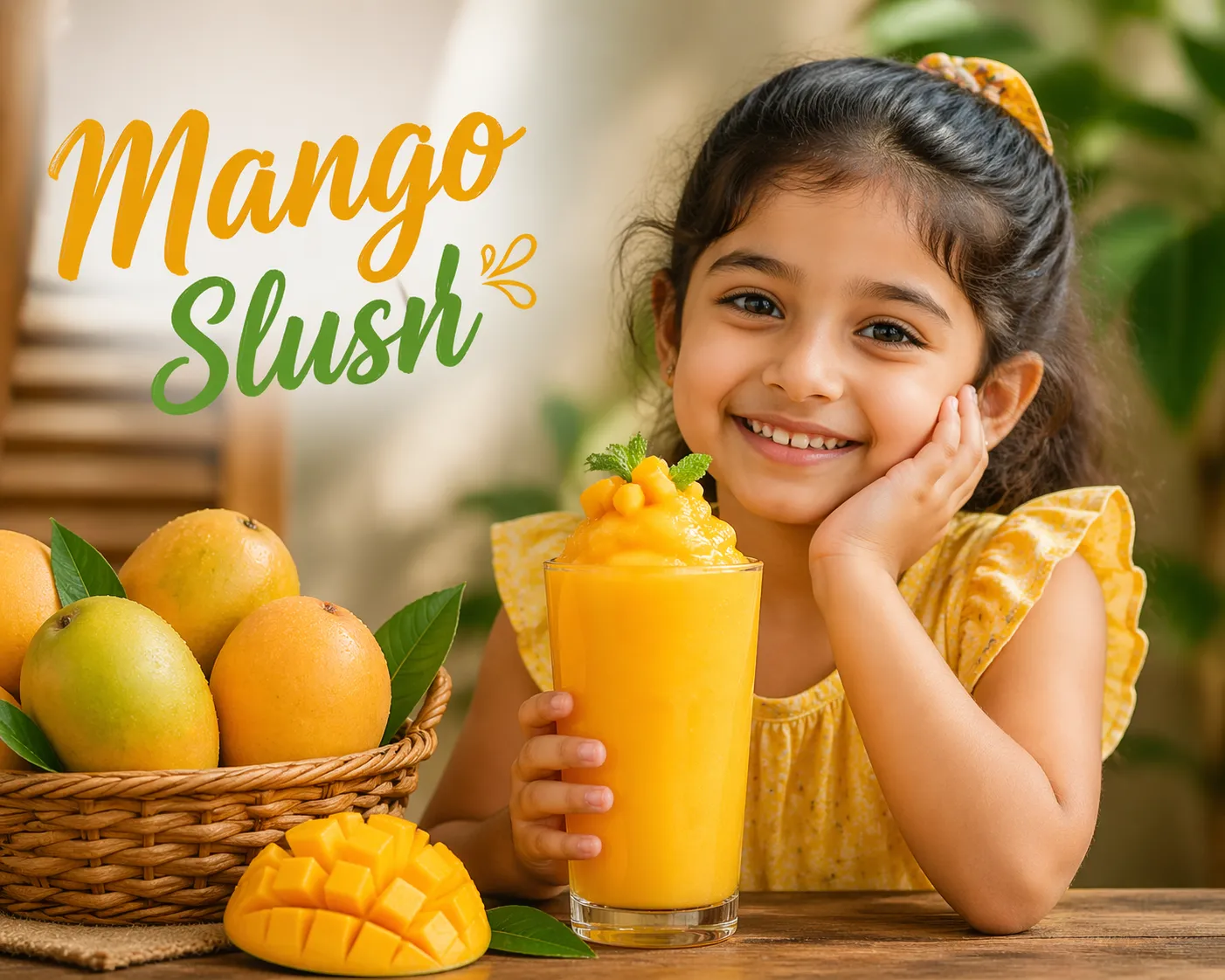
If you search “mango slush drink,” you’ll find the same loop playing on repeat: blend frozen mango with ice, maybe add honey, serve immediately. Done. And while a 3-ingredient mango slush is genuinely delicious, the recipes that exist online skip the most interesting parts entirely — which mango variety actually makes the best slush, why your mango slush tastes watery and thin even with good fruit, the exact science behind getting a silky versus icy texture, how to infuse global flavor profiles into a single drink, and how to properly build a mango slush that holds its texture long enough to actually enjoy it.
This guide covers everything those three-ingredient recipes forgot to tell you — plus a master recipe, a full flavor map, and techniques you won’t find anywhere else.
- The Mango Problem Nobody Talks About
- Why Your Mango Slush Tastes Watery (And the Fix)
- The Master Mango Slush Recipe
- The Global Mango Slush Map: 8 Flavor Profiles
- Fresh vs. Frozen Mango: The Definitive Answer
- Mango Slush Cocktails: The Adult Version Done Right
- Mango Slush for Special Dietary Needs
- Nutrition At a Glance
- The Bottom Line
The Mango Problem Nobody Talks About
Here’s the thing about mangoes that most recipes treat as a minor footnote: not all mangoes taste the same frozen, and the variety you use makes a dramatic difference in your finished slush.
Mango is roughly 82% water by weight. When it freezes and gets blended, that water becomes part of the ice matrix — which is great for texture, but terrible for flavor intensity unless you start with a variety that’s high in sugar and low in fiber.
Different mango varieties behave very differently in a slush:
| Mango Variety | Flavor When Frozen | Fiber Level | Best Use |
|---|---|---|---|
| Ataulfo | Buttery, rich, intensely sweet | Very low | Best for slush — no stringiness, rich flavor |
| Kent | Deep tropical sweetness, slight tartness | Low | Excellent — holds flavor cold |
| Tommy Atkins | Mild, slightly bland when cold | High/Stringy | Not recommended — most supermarket mangoes are this |
| Alphonso | Intensely aromatic, custard-like | Low | Exceptional if available; most found canned |
| Keitt | Balanced sweet-tart, firm flesh | Medium | Good — especially when slightly underripe |
| Frozen Mango Chunks (generic) | Depends on source — usually Tommy Atkins | Medium | Convenient; boost with mango nectar to compensate |
The key takeaway: Most standard supermarket fresh mangoes in the US are Tommy Atkins — the large, red-green oval variety. They’re bred for shelf life and transport, not flavor. For a genuinely outstanding mango slush, seek out Ataulfo (yellow, small, kidney-shaped) or use high-quality frozen mango labeled “Alphonso” or “Ataulfo” (commonly found at Indian or Caribbean grocery stores).
If you’re working with Tommy Atkins — the default — you need to compensate with 2 tablespoons of mango nectar added to the blender. It brings the natural mango intensity back up.
You might also like: 05 Best Frozen Drinks for Extreme Summer Heat
Why Your Mango Slush Tastes Watery (And the Fix)
This is the number one complaint about homemade mango slushes, and not a single major recipe explains why it happens or how to prevent it, here SlushWeb will explain.
The cause: Mango is 82% water. When you blend it with ice (also water) and it begins to melt even slightly during blending, you’re creating a diluted mango-water mixture, not a concentrated slush. The problem compounds if:
- You use a high-fiber mango variety (the fiber absorbs and then releases water)
- Your blender runs too long and friction melts the ice
- Your mango was at room temperature, not frozen or pre-chilled
The fix has three parts:
1. Pre-freeze fresh mango. Cut your mango and freeze the chunks for at least 2 hours before blending. Cold mango + cold ice = far less melting during blending. This single step transforms the result more than any other change.
2. Use mango nectar instead of water as your blending liquid. Every recipe that adds liquid uses plain water. Water dilutes. Mango nectar (not syrup — the actual juice, like Jumex or Goya brand) adds liquid and mango flavor simultaneously, meaning your slush tastes more intensely mango at every hydration level.
3. Add ¼ TSP xanthan gum. This food-safe thickener binds the ice crystals to the mango puree, creating a unified, cohesive slush instead of a separated icy-watery mixture. It extends texture life by 10–15 minutes and is the single biggest improvement you can make that no recipe currently mentions. Find it in the baking aisle for under $5.
The Master Mango Slush Recipe
Ingredients [Makes 2 generous servings (~20 oz total)]
The fruit base:
- 2 cups fresh mango, cubed and frozen 2+ hours (or high-quality frozen mango)
- 2 TBSP mango nectar (Jumex or Goya brand — not mango syrup)
The texture layer:
- 1½ cups crushed ice
- ¼ tsp xanthan gum
The flavor brighteners:
- 1½ TBSP fresh lime juice (non-negotiable — see why below)
- ½ TSP finely grated lime zest
- 1 Pinch of fine sea salt (tiny — just a pinch; it amplifies the fruit)
The sweetener:
- 1–2 TBSP honey, dissolved in 1 TBSP warm water first (see the Honey Rule)
- OR 1–2 TBSP simple syrup for a cleaner flavor
The Honey Rule (What Every Recipe Gets Wrong)
Every recipe that uses honey tells you to add it directly to the blender. This is wrong, and the Hawaii-based recipe is the only one that mentions the issue without explaining why: honey is hygroscopic — it attracts and holds water molecules. At cold temperatures, it seizes and clumps around the ice rather than distributing through the slush, creating pockets of intense sweetness rather than even flavor throughout.
Always dissolve honey in 1 tablespoon of hot water (not boiling — just very warm) and let it cool to room temperature before adding to the blender. It takes 60 seconds and makes a visible difference in the final drink.
The Lime Juice Rule: Why It’s Not Optional
Every top recipe treats lime juice (if it mentions it at all) as an optional garnish note — “a squeeze makes it bright!” But this misses the real reason citrus is essential.
Mango is a low-acid fruit with a pH of roughly 3.4–4.8 depending on ripeness. When frozen, our taste receptors for sweetness become less sensitive, which means cold mango tastes flatter and more one-dimensional than room-temperature mango. Acidity, however, is perceived more consistently at cold temperatures.
Adding lime juice does three things:
- It compensates for the flavor suppression from cold by introducing a note our taste buds can still detect strongly (sour/acid)
- It activates the specific aromatic compounds in mango that give it that floral, tropical smell — the same principle behind using lemon in apple pie
- It preserves the orange-gold color of the slush. Mango oxidizes quickly when blended; the citric acid in lime juice acts as a natural color protector
The right amount: 1½ tablespoons per 2 cups of mango. This is enough to brighten without making the slush taste citrusy. If you can taste the lime, you’ve used too much.
Step-by-Step Instructions
Step 1: Chill your glasses. Place serving glasses in the freezer while you prep. Even 5 minutes extends the slushie’s texture life significantly. A room-temperature glass melts the bottom layer on contact.
Step 2: Pre-blend the ice. Add 1½ cups crushed ice to the blender alone and pulse 3–4 times. You want it snow-fine, not chunky. Set aside in a cold bowl.
Step 3: Blend the mango base. Add frozen mango chunks, mango nectar, lime juice, lime zest, salt, xanthan gum, and dissolved honey to the blender. Blend on high for 20–25 seconds until smooth and pourable.
Step 4: Add ice and pulse. Add the pre-crushed ice to the mango base in the blender. Pulse 5–6 times in 2-second bursts. Do NOT blend continuously — pulsing preserves ice crystal size and prevents heat buildup. You’re looking for a thick, uniform, spoonable-but-pourable texture.
Step 5: Taste and calibrate. Dip a spoon in. If it tastes flat, add a few more drops of lime juice — cold dulls sweetness but preserves acidity, so a touch more lime brings the flavor forward. If it needs more sweetness, add a small drizzle of honey syrup and pulse once.
Step 6: Serve in pre-chilled glasses immediately. Pour or spoon into the chilled glasses. Garnish if desired (see Garnish section below). Drink within 10 minutes for peak texture, or pop the glasses in the freezer for up to 20 minutes if you need to hold them.
The Global Mango Slush Map: 8 Flavor Profiles
This is the section no other recipe has ever written. Mango slush exists in distinctly different versions across cultures worldwide — each with a different supporting flavor cast. Here are eight distinct regional styles you can make at home.
Indian-Inspired Aam Panna Style
Add: ½ tsp roasted cumin powder + pinch of black salt (kala namak) + ¼ tsp fresh ginger, grated The smoky-salty notes of kala namak and the earthiness of cumin is how street vendors in India serve mango slush. The sulfurous, egg-like quality of black salt sounds strange and tastes transformative. Find it at any South Asian grocery store. This version is genuinely one of the most complex and interesting things you can make with mango.
Mexican Mangonada Style
Add: 1 tbsp Tajín (chili-lime salt) blended in + chamoy drizzled on top + extra Tajín on the rim The mangonada is Mexico’s legendary street slush — sweet, sour, salty, and spicy all at once. The chamoy (a savory-sweet-sour condiment made from pickled fruit) is what makes it genuinely different from every other mango drink in the world. Don’t skip it.
Thai-Inspired Mango with Sticky Rice Notes
Add: 2 tbsp full-fat coconut cream + ½ tsp pandan extract (or a few drops of vanilla) This is essentially a drinkable version of mango sticky rice — one of Thailand’s most beloved desserts. The coconut cream creates a rich, silky texture and the pandan adds a grass-vanilla aroma that makes the mango taste rounder and more floral.
Pakistani Mango Lassi Slush Style
Add: 3 tbsp whole milk yogurt (full-fat) + 1 tbsp rose water + pinch of cardamom Mango lassi gets a slush treatment. The yogurt adds tang and creaminess, the rose water adds a floral perfume that’s deeply traditional, and the cardamom ties it together. This variation is particularly heat-resistant — the fat in the yogurt keeps the slush from separating as fast.
Brazilian Mango-Passionfruit (Maracujá) Style
Add: 2 tbsp fresh or frozen passionfruit pulp Passionfruit and mango are a classic Brazilian pairing. The passionfruit adds a sharp tropical tartness that contrasts beautifully against the sweet mango, and the small seeds create a visual and textural interest in the final drink.
Japanese-Inspired Mango Kakigori Style
Technique change: Don’t blend — use shaved or finely grated ice, and pour a mango-honey syrup over the top Japanese kakigori (shaved ice) has a texture completely different from a blended slush — it’s feather-light, fluffy, and absorbs flavor syrups differently. To make the mango syrup: blend 1 cup mango with 3 tbsp honey and 2 tbsp water until smooth, strain through a fine mesh, and pour over finely shaved ice. Finish with a drizzle of condensed milk.
Filipino-Inspired Mango with Calamansi
Add: 2 tbsp calamansi juice (or a mix of ½ lime + ½ orange juice as a substitute) Calamansi is a small Philippine citrus that’s sharper and more floral than lime. Combined with the incredibly sweet Philippine mangoes (the Carabao variety, considered by many to be the world’s best), this version is beautifully balanced. The calamansi adds complexity without any sourness that overpowers the fruit.
Spicy-Sweet Mango Slush (For the Adventurous)
Add: 1 small slice of fresh jalapeño (seeds removed) blended with the mango + pinch of Tajín on top The cold temperature of a slush tempers spice heat into a slow, pleasant warmth that builds as you drink rather than hitting immediately. The jalapeño should be almost imperceptible as jalapeño — you should taste a vague warmth, not chile heat. Start with a very thin slice and taste before adding more.
Fresh vs. Frozen Mango: The Definitive Answer
Almost every recipe says “fresh is best, but frozen works too” and leaves it there. The real answer is more nuanced.
Use fresh mango when:
- It’s peak mango season and you have access to Ataulfo, Kent, or Alphonso varieties
- The mango is fully ripe (yields gently to pressure, fragrant at the stem end)
- You pre-freeze the fresh chunks for 2+ hours before blending
Use frozen mango when:
- You want a more consistent, year-round result with less prep
- You’re making a large batch for a group
- You’re buying at a mainstream supermarket (frozen is often processed at peak ripeness, making it more flavorful than out-of-season fresh)
- You want a thicker, more uniform texture
The hybrid method (best of both): Use 1 cup fresh ripe mango for flavor intensity plus 1 cup frozen mango for texture and chill. The fresh mango provides aromatic compounds that survive blending better than re-frozen fruit, while the frozen mango does the structural work of keeping everything cold without melting.
Signs your fresh mango is not ripe enough:
- Tastes starchy or piney rather than sweet
- White or pale yellow flesh (should be deep orange-gold)
- No aroma at the stem
Underripe mango doesn’t just taste worse — it has a completely different chemical composition (higher starch, lower sugar) that won’t perform the same way frozen.
Mango Slush Cocktails: The Adult Version Done Right
Just adding rum to a mango slush is how you get a mediocre frozen drink. Here’s how to do it properly.
The alcohol selection:
- White rum — Cleanest choice; lets the mango lead while adding warmth
- Coconut rum (Malibu) — Lower ABV, slightly tropical; blends beautifully
- Tequila (blanco/silver) — Grassiness of agave complements mango’s fruit character; this is a sophisticated pairing
- Vodka — Neutral; use when you want pure mango flavor with an alcohol kick
- Aperol — Unexpected but brilliant; the bitter orange of Aperol plays against the sweetness of mango in a way that no other spirit does
The technique that keeps your slush from turning watery: Alcohol lowers the freezing point of liquid. If you blend alcohol directly into the slush, the alcohol portion won’t freeze, creating pockets of warm liquid that accelerate melting throughout. Instead: blend the slush base without alcohol, pour into the glass, then float 1.5 oz of your chosen spirit over the back of a spoon so it sits on top. Guests stir it in themselves. Texture stays intact.
The batch cocktail method for parties: Make a concentrated mango base (double the fruit, no ice), freeze in cubes overnight. When guests arrive, blend 6–8 mango cubes with 1.5 oz rum per serving and 2–3 regular ice cubes. Ready in 30 seconds per serving with no prep on the day.
Mango Slush for Special Dietary Needs
No added sugar / naturally sweetened: Use only fully ripe Ataulfo or Alphonso mango — no sweetener needed at all. These varieties have natural Brix values (sugar concentration) of 18–22%, which is enough sweetness even at slushie temperature. Taste before adding any honey or syrup.
Vegan: The standard recipe is already vegan. For the yogurt-based Pakistani variation, use full-fat coconut yogurt — it behaves nearly identically.
Lower calorie: Replace half the mango with frozen cucumber chunks. Cucumber is 96% water, nearly flavorless when frozen, and adds volume and chill without meaningful calories. The mango flavor remains dominant, but the calorie count drops by about 40%.
Kids’ version: Add 2 tbsp of coconut water instead of mango nectar, skip the salt, and use a touch less lime. Coconut water adds light sweetness and electrolytes — genuinely useful after outdoor play in the heat.
Nutrition At a Glance
| Version | Calories | Sugar | Notable Nutrients |
|---|---|---|---|
| Standard (mango + ice + honey) | ~130 | ~28g | Vitamin C (60% DV), Vitamin A (25% DV) |
| No-sugar-added (ripe Ataulfo only) | ~95 | ~22g | Fiber, Folate, Potassium |
| Coconut cream version | ~165 | ~24g | Medium-chain fats, Vitamin C |
| Cocktail version (+1.5 oz white rum) | ~230 | ~22g | – |
| Low-calorie (50% cucumber swap) | ~75 | ~14g | Vitamin K, Hydration |
The Bottom Line
A mango slush sounds simple, and in its most basic form, it is. But the gap between a three-ingredient blend and a genuinely memorable mango slush comes down to choices most recipes never explain: picking the right mango variety, understanding why the fruit tastes flat when cold and how to fix it, dissolving honey properly, using lime juice not just for brightness but as a technical flavor restorer, and adding a pinch of xanthan gum to make your slush last longer than four minutes in a glass.
Make it the simple way when you’re in a hurry. Make it the full way when you want to taste what a mango slush can actually be.