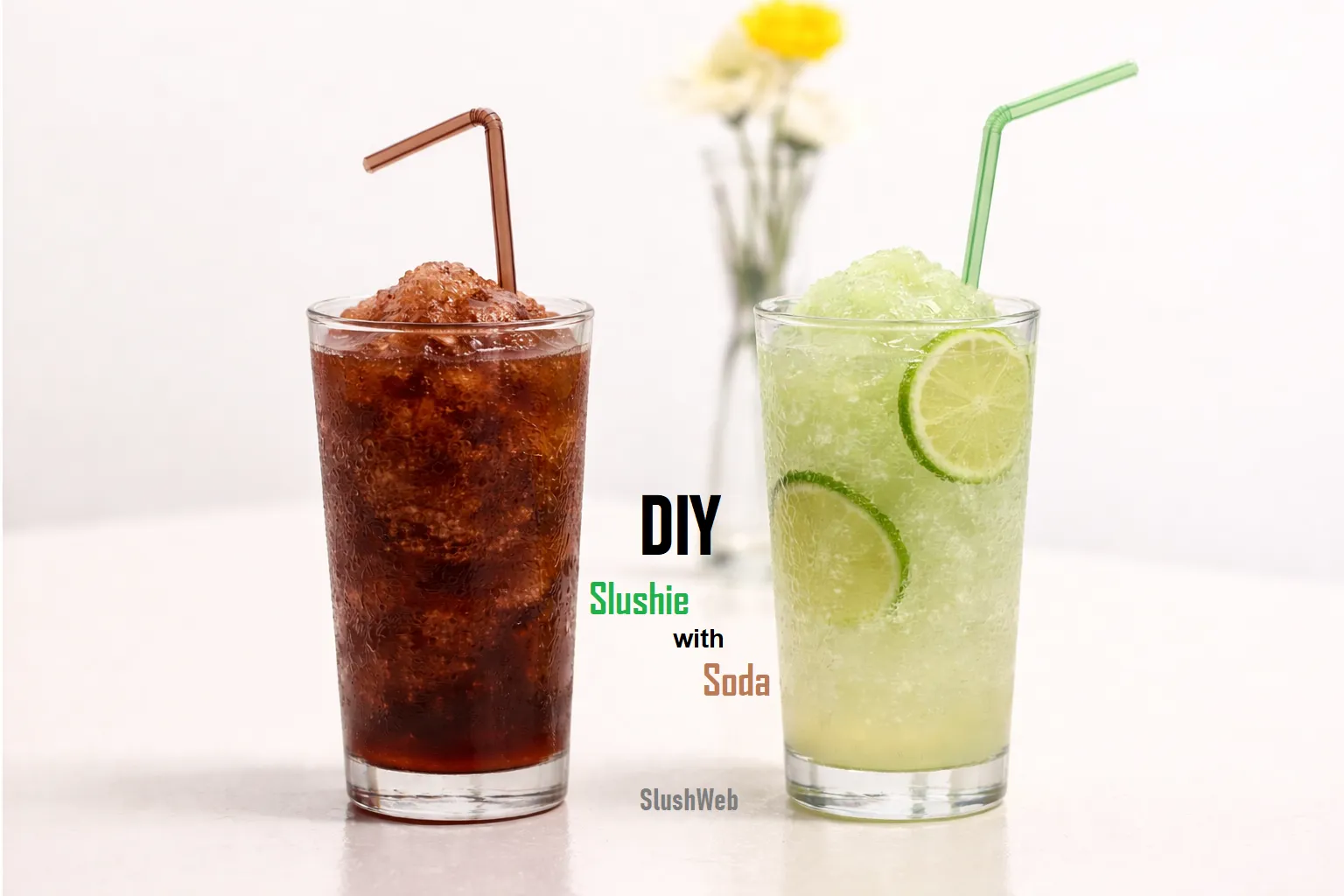
It’s 2 PM, the sun is doing its worst, and someone hands you a soda slushie so thick and cold it hurts to hold the glass. That first sip — carbonated, icy, impossibly refreshing — is one of summer’s small perfections. The problem is, most homemade versions melt into a flat, watery puddle before you’ve had three sips. Not because the idea is flawed, but because nobody explains the parts that actually matter: why carbonation changes the texture of frozen drinks, which sodas genuinely work and which ones fight you, and how to build a slushie that holds its shape long enough to actually enjoy it. This guide covers all of it.
- Why Soda Makes a Better Slushie (The Science Part)
- The Soda Slushie Comparison: Which Soda Works Best?
- 1. The Master Soda Slushie Recipe (Blender Method)
- 2. The Freezer Method (No Blender Required)
- Soda Slushie Flavor Combinations (Organized by Soda Base)
- The Party Slushie Bar: Serving a Crowd
- Soda Slushie Cocktails (Adults Only)
- Troubleshooting Your Soda Slushie
- Nutrition Snapshot (Per 10 oz Serving)
- Frequently Asked Questions
- The Bottom Line
Why Soda Makes a Better Slushie (The Science Part)
Most people reach for soda in a slushie out of habit or convenience. But there’s a real reason it works better than plain water, and understanding it makes you a better slushie-maker.
- Carbonation creates micro-bubbles in the ice matrix. When carbonated liquid freezes, the CO₂ bubbles get trapped between tiny ice crystals, creating a lighter, fluffier texture than a water-based slushie. This is why gas station ICEE machines use carbonated syrup rather than still liquid — the bubbles are doing structural work, not just adding fizz.
- Soda is already flavored and sweetened to the right level for frozen consumption. Cold temperatures suppress sweetness. A soda calibrated to taste perfect at fridge temperature (around 38°F) actually ends up tasting slightly weaker when frozen at slushie temperature (26–28°F). This is a feature, not a bug — it means soda slushies taste refreshingly light rather than cloying.
- The sugar in soda acts as a natural antifreeze. Just like in the Blue Raspberry Slushie guide, dissolved sugar lowers the freezing point of liquid, which is what gives slushies their soft, semi-frozen consistency instead of freezing into a rock-solid block. Regular soda has roughly 10–12% sugar content — almost exactly the sweet spot for slushie texture. This is not an accident. Slurpee syrups are engineered to the same ratio.
The Soda Slushie Comparison: Which Soda Works Best?
This is something no other recipe bothers to explain. Not all sodas behave the same way when frozen. Here’s what you need to know before you pick your can:
| Soda Type | Slushie Texture | Flavor After Freezing | Notes |
|---|---|---|---|
| Sprite / 7UP | ★★★★★ | Bright, slightly tangy | Best overall — clean base, high carbonation |
| Club Soda | ★★★★★ | Neutral | Best for flavored slushies using syrups/powders |
| Coca-Cola | ★★★★☆ | Deep, slightly muted | Works well; flavor complexity holds up cold |
| Pepsi | ★★★★☆ | Slightly sweeter than Coke | Good; marginally more icy texture |
| Dr Pepper | ★★★★☆ | Unique spiced flavor intensifies | Surprisingly excellent frozen |
| Mountain Dew | ★★★★☆ | Citrus-forward, vibrant | Excellent — the neon color is a bonus |
| Orange Fanta | ★★★★☆ | Candy-orange, fun | Loses some citrus brightness when frozen |
| Root Beer | ★★★☆☆ | Wintergreen fades slightly | Good but add a splash of vanilla for depth |
| Grape Soda | ★★★☆☆ | Sweet, candy-like | Works, but can taste artificial if over-frozen |
| Diet Soda | ★★★☆☆ | Slightly bitter at slushie temp | Needs 1 tbsp allulose to compensate |
| Energy Drinks | ★★☆☆☆ | Medicinal notes become stronger | Not recommended unless you like the taste |
| Tonic Water | ★★☆☆☆ | Bitter | Only for adult cocktail slushies with gin |
The winner for a no-fuss, any-flavor slushie: Sprite or club soda. Their neutral profiles let whatever flavor you add shine, and their high carbonation produces the most consistently fluffy texture.
1. The Master Soda Slushie Recipe (Blender Method)
This is the fastest, most reliable approach. Works with any soda, no special equipment needed.
Ingredients [Makes 2 large servings (about 20 oz)]
- 1½ Cups soda of choice, chilled (*not frozen — see note)
- 2½ Cups crushed ice
- 2–3 TBSP simple syrup (*optional, to boost sweetness — see note)
- ½ TSP citric acid powder (**the texture and flavor secret, explained below)
- Flavor add-ins of your choice (see the Flavoring section)
*Chilled, not frozen: Most recipes tell you to freeze the soda into cubes first. That works, but it also means extra planning. Chilling the soda in the fridge for at least 1 hour before blending — paired with a lot of crushed ice — gets you 90% of the same result in a fraction of the time. Use the frozen cube method when you want maximum slushie-ness; use the chilled method when you want a slushie right now.
Step-by-Step Instructions
Step 1: Chill your glass. Place your serving glasses in the freezer while you prep. Even 5 minutes makes a measurable difference in how long your slushie holds its texture. This step is almost never mentioned in other recipes and it genuinely matters.
Step 2: Crush your ice properly. This is the most important step for texture. Blenders don’t crush ice uniformly when it’s added in large chunks. Place ice cubes in a zip-lock bag and beat with a rolling pin until you have fine snow-like pieces, or use your blender’s “ice crush” mode before adding liquid. Fine ice = smooth, uniform slushie.
Step 3: Add soda first, ice second. Pour your chilled soda into the blender before adding the ice. Soda first prevents ice from packing down and stalling the motor. Add your citric acid and any flavor additions at this stage.
Step 4: Blend in bursts. Blend for 15 seconds, stop, scrape the sides, blend another 15 seconds. Repeat once more if needed. Total blending time should be under a minute. Over-blending melts the ice from friction heat and produces a watery result.
Step 5: Taste, then serve. Pour into your pre-chilled glasses immediately. Check the flavor — if it tastes flat, the cold is suppressing the sweetness. Add a drizzle of simple syrup and stir lightly. Do not re-blend after adding syrup.
The Citric Acid Secret (What Everyone Is Missing)
**This one ingredient transforms a soda slushie from decent to outstanding, and we have not seen it mentioned in a single other recipe online.
Citric acid powder (found in the baking aisle or online for a few dollars) does three things:
- Brightens the flavor — Cold suppresses our ability to taste sweet and savory, but it actually enhances our perception of sour. A tiny pinch of citric acid makes the soda’s natural fruit flavors pop sharper and more vivid when frozen.
- Preserves the carbonation — CO₂ dissolves more readily in more acidic liquids. Adding a small amount of acid before blending helps the remaining carbonation stay in suspension during the blending process, so you end up with a bubblier finished slushie.
- Extends texture life — It slows the rate at which ice crystals regroup into larger chunks after blending, buying you a few extra minutes of perfect slushie consistency.
How much to use: ½ tsp per 1½ cups of soda. More than that and you’ll taste it. Less than that and the effect is minimal. If you don’t have citric acid, fresh lime juice (1½ tsp) works as a decent substitute, though it adds its own flavor.
2. The Freezer Method (No Blender Required)
This is the viral TikTok method — and it genuinely works — but it requires precise timing and most people don’t know the variables that determine success.
How It Works (The Real Science)
When a carbonated liquid is supercooled (chilled below its freezing point without actually freezing), it exists in an unstable state. Any sudden physical disturbance — opening the cap, tipping the bottle, adding an ice cube — triggers a rapid chain crystallization event where the whole liquid freezes almost instantly. This is the same principle behind instant ice demonstrations.
Step-by-Step Freezer Method
Ingredients: 1 bottle (16–20 oz) of any soda
Step 1: Choose the right bottle. This method works best with plastic bottles, not cans. The slight pressure from a plastic bottle helps maintain carbonation during freezing. Cans work but are harder to control.
Step 2: Shake, then freeze. Give the sealed bottle 5–8 shakes to pressurize it. Place it upright in the freezer for exactly 3 hours and 15 minutes (for a standard 20 oz bottle at 0°F / -18°C). This timing is critical:
- Under 3 hours: Not cold enough — you’ll get cold soda, not slush
- Over 3.5 hours: Too frozen — the whole bottle will be a solid block
Step 3: The trigger moment. Take the bottle out. Very slowly crack the cap open just a few millimeters to release a tiny bit of pressure. Then invert the bottle. The pressure change triggers crystallization from the bottom up. Watch it turn to slush in real-time.
Step 4: Pour and serve. Pour immediately into a pre-chilled glass. It melts faster than a blended slushie, so drink quickly.
Why It Sometimes Fails (What Other Guides Don’t Tell You)
The freezer method fails for three common reasons:
- Your freezer is too warm. Most residential freezers sit between 0°F and 5°F. If yours runs at 10°F or higher, the soda won’t supercool — it’ll just be a very cold drink. Check with a freezer thermometer.
- The bottle was disturbed in the freezer. Any vibration (someone bumping the freezer, a defrost cycle) can cause premature freezing. Store it away from fans and don’t open the freezer door unnecessarily.
- You opened the cap too fast. A sudden pressure drop causes too rapid a CO₂ escape, which triggers freezing before you pour, turning it into a solid bottle.
Diet Soda Slushies: The Problem and the Fix
Diet soda slushies have a texture problem that comes down to chemistry, and no other recipe addresses it.
Regular soda contains 10–12% sugar. That dissolved sugar lowers the freezing point of the liquid to around 26–28°F, which is what creates the soft, semi-frozen slushie consistency. Remove the sugar, and the freezing point jumps back up toward 32°F — meaning diet soda freezes harder and faster, creating a dense, icy slushie rather than a silky, scoopable one.
The fix: Add 2 tablespoons of liquid allulose per 12 oz of diet soda. Allulose is a rare sugar that has almost no calories but behaves exactly like regular sugar in freezing applications — it lowers the freezing point and restores the soft texture. Do not use erythritol (too crystalline when cold), stevia (no effect on freezing), or xylitol (bitter at slushie temperatures).
The result is a diet soda slushie that tastes cleaner and lighter than the regular version, but has the same satisfying silky texture.
Soda Slushie Flavor Combinations (Organized by Soda Base)
Most recipes suggest one or two flavor ideas. Here’s a complete flavor map organized by which soda you’re starting with.
Sprite / 7UP Base
- Sprite + raspberry syrup + fresh lime juice → Raspberry Limeade Slushie
- Sprite + peach nectar (2 tbsp) + fresh mint → Peach Mojito Slushie (no alcohol)
- Sprite + blue raspberry Kool-Aid + lemon juice → Classic Arcade Slushie
- Sprite + mango puree (3 tbsp) + chili-lime salt rim → Tajín Mango Slushie
Coca-Cola Base
- Coke + 1 tbsp grenadine → Cherry Coke Slushie
- Coke + 1 tsp vanilla extract + splash of cream (added after blending) → Coke Float Slushie
- Coke + squeeze of fresh lime + pinch of salt → Mexican Coke-Style Slushie (the salt makes this extraordinary)
Mountain Dew Base
- Mountain Dew straight → No additions needed; it’s naturally perfect
- Mountain Dew + pineapple juice (2 tbsp) → Tropical Dew Slushie
- Mountain Dew + watermelon syrup → Summer festival in a cup
Root Beer Base
- Root Beer + ½ tsp vanilla extract → Amplified Root Beer Slushie
- Root Beer + 2 tbsp vanilla ice cream blended in → Frozen Root Beer Float
Dr Pepper Base
- Dr Pepper straight → Intensifies the spiced complexity beautifully when frozen
- Dr Pepper + cherry syrup (1 tbsp) → Copycat Sonic Slushie
The Party Slushie Bar: Serving a Crowd
It’s the most practical application of soda slushies to serving a party.
The Soda Concentrate Method for Parties
Instead of blending individual servings, make a soda ice base the night before. Pour two 2-liter bottles of your chosen soda into a large shallow baking dish and freeze overnight. The next day, set the frozen soda slabs on a counter with a bag of regular ice and let guests blend their own servings in 30-second batches.
Prepare 3–5 flavor shot bottles (small squeeze bottles with different syrups, concentrates, or fruit juices) so guests can customize. Label them clearly. Set out rim options like Tajín, sugar, or citric acid-salt for the rim of the glass.
How To Keep Slushies from Melting at The Serving Table
Fill a large serving bowl halfway with crushed ice and set your blended slushie pitcher inside it. The ice bath underneath keeps the temperature consistent for up to 30 minutes — far longer than simply leaving it on the counter. No other recipe suggests this, but it’s the difference between a slushie station and a puddle station.
Soda Slushie Cocktails (Adults Only)
Adding alcohol to a soda slushie isn’t as simple as splashing in vodka — alcohol dramatically lowers the freezing point, which can prevent your slushie from ever setting up properly. Here’s how to do it right. You can use our calculator to avoid any misadventure.
The rule: Keep alcohol content in the final drink below 8–10%. Above that, the freezing point drops too low for any home freezer to compensate.
Per 12 oz soda, these amounts work well:
- Vodka: 1.5 oz (one standard shot)
- White rum: 1.5 oz
- Coconut rum (Malibu): 2 oz — works slightly better because it’s lower ABV
- Tequila: 1 oz only — its distinctive flavor intensifies when cold
- Blue curaçao: 1.5 oz + visual bonus of deep blue color
The technique: Do not blend alcohol with the ice. Instead, blend your soda and ice base first, pour into the glass, then pour the alcohol slowly over the back of a spoon so it pools at the top. Guests stir it in themselves. This way, your slushie texture is perfect and the alcohol ratio is easy to control.
Troubleshooting Your Soda Slushie
| Problem | Solutions |
|---|---|
| My slushie is completely watery. | You blended too long or used room-temperature soda. Friction from the blender blades generates heat. Blend in short bursts (15 seconds max) and always start with cold soda. |
| My slushie is pure ice, not slushy at all. | Your soda-to-ice ratio is off — too much ice and not enough liquid. The ideal ratio is 1 part liquid to 1.5–1.75 parts ice by volume. Add more cold soda and re-blend briefly. |
| It tastes flat and flavorless. | Two causes: (1) all the carbonation escaped during blending (expected — you lose some), or (2) the cold is suppressing the flavor. Add citric acid or a squeeze of citrus to brighten everything up. Avoid the temptation to add more soda mix — it usually just makes it sweeter, not more flavorful. |
| My freezer method soda didn’t turn slushy, it just opened as a cold drink. | Your freezer wasn’t cold enough, or the timing was off. For reliable results, freeze for exactly 3h 15m in a freezer verified to be 0°F or colder. A $10 freezer thermometer solves this permanently. |
| The freezer method bottle froze solid before I could pour it. | You opened the cap too slowly or it was in too long. Crack the cap quickly with a sharp quarter-turn, not a slow creep. And stay strict on timing — 3h 15m is the window. |
| My slushie melts too fast. | Three fixes: (1) pre-chill the glass, (2) add ¼ tsp xanthan gum to the blender before blending — it binds the ice crystals and significantly extends hold time, (3) use soda frozen into ice cubes instead of regular ice, which melts far more slowly. |
Make-Ahead Strategy
Soda slushies are best fresh, but here’s how to prep intelligently:
The night before: Freeze half of your soda in ice cube trays. Keep the other half in the fridge, sealed. When ready to serve, blend the soda cubes with the fresh soda — no added ice needed. The result is an undiluted, intensely flavored slushie that stays consistent longer because the cubes melt into more soda rather than water.
Up to one week ahead: Blend the slushie, pour into a freezer-safe container, and freeze completely. When ready to serve, let it thaw at room temperature for 10–15 minutes, then either stir vigorously with a fork (for a granita texture) or re-blend for 10 seconds to restore slushie consistency.
Nutrition Snapshot (Per 10 oz Serving)
| Soda Type | Calories | Sugar | Caffeine |
|---|---|---|---|
| Sprite/7UP base | ~120 | ~30g | 0mg |
| Coca-Cola base | ~120 | ~31g | ~34mg |
| Diet Soda + allulose | ~30 | ~7g | varies |
| Club Soda + syrup | ~90 | ~22g | 0mg |
Frequently Asked Questions
Can I use sparkling water instead of soda?
Yes, but the result will be less sweet and lighter in flavor. Sparkling water has no sugar, so the texture will be icier. Use the full ½ cup of simple syrup to compensate, and add your flavoring as you normally would.
Will blending soda make it explode?
No — this is a common fear that holds people back. Blending rapidly releases CO₂, but in a vented blender jar with the lid on, the gas escapes harmlessly. The only risk is a messy overflow if you fill the blender past its maximum line. Keep it at 70% capacity.
Why does my soda slushie taste more acidic than regular soda?
Correct — and expected. Blending releases CO₂, which means less carbonic acid (H₂CO₃) remains dissolved. The flavor profile shifts slightly since carbonic acid was balancing the sweetness. Adding a tiny pinch of baking soda (seriously — just a pinch, ⅛ tsp max) neutralizes excess acidity if it bothers you.
Can I make this in a food processor instead of a blender?
Yes. Crush the ice in the food processor first until fine, transfer to a bowl, then pulse the soda in the processor, add the ice back in batches, and pulse until combined. It’s slightly messier but works well.
What’s the difference between a slushie and a Slurpee?
A Slurpee (7-Eleven’s branded version) and an ICEE use a specialized machine that carbonates sweetened syrup under pressure and freezes it while churning, creating extremely fine, stable crystals. A DIY blender slushie uses crushed ice as the frozen element. The texture of a machine slushie is smoother and more stable; a blender slushie is chunkier but fresher and completely customizable.
Is it safe to freeze canned soda?
Yes, with one caveat: don’t freeze a sealed, unopened can. The expanding liquid will burst the can (making a spectacular and sticky mess in your freezer). Always pour soda into a tray, open container, or plastic bottle with room to expand before freezing.
The Bottom Line
A soda slushie is one of the simplest drinks you can make — but simple doesn’t mean there’s nothing to learn. Understanding why carbonation improves texture, which sodas perform best when frozen, how to troubleshoot the freezer method, and why a pinch of citric acid makes everything taste brighter: these are the details that separate a great soda slushie from a forgettable one.
Pick your soda, grab your blender, pre-chill your glass, and you’re four minutes away from the best thing you’ve made all summer.